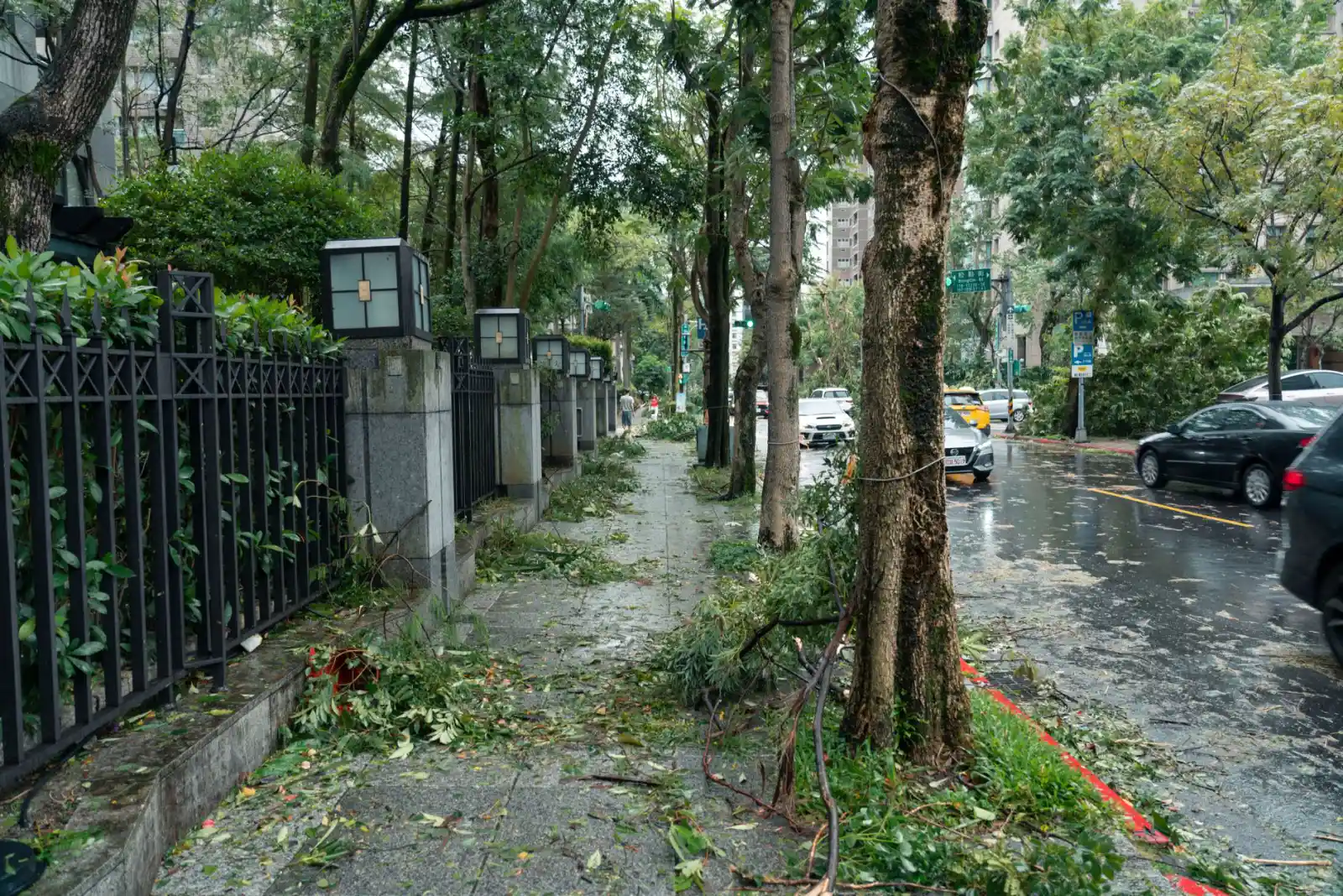
Commercial Emergency & Storm Tree Services in Rochester, MN
Access reopened first, hazards over walkways cleared next, debris after. After-hours and weekend calls for property that has to open in the morning.
Rochester Elite Treecare is your local resource for commercial emergency and storm tree service across Rochester, Olmsted County and Southeast Minnesota. We work with experienced arborists who take after-hours calls and who prioritise getting a property open and safe before the tidying starts.
On commercial property the emergency is usually access and exposure rather than the tree. An entrance blocked at 6am means a business does not trade. A limb hanging over a walkway a property owner is responsible for is an open liability every hour it stays there. The tree work involved is the same as anywhere; what changes is the order it happens in and how fast the first pass has to be.
So the sequence is deliberate: reopen access, clear anything overhead where people walk, then deal with the wood and the debris on a scheduled visit. Trying to complete the whole job in one overnight push is how corners get cut on a tree that is already damaged and holding load. The cleanup is genuinely the part that can wait until morning.
Commercial Emergency & Storm Tree Services in Rochester, MN
Emergency Commercial Tree Removal
Emergency removal on commercial property is for a tree that is failing now and sitting where it matters — over an entrance, a walkway, a loading area, or occupied parking. The approach differs from a planned removal because the tree is already compromised: nothing gets climbed until the failure is understood, and the takedown releases load in a controlled order rather than felling. The practical constraint is space. On a working site the exclusion zone has to be established and actively managed before any cutting starts, which on a property with people arriving means someone is holding that boundary the whole time.
Storm-Damaged Tree Removal
After a wind event the useful work is triage before removal. A tree that lost one limb cleanly and kept most of its crown generally recovers once the tear is pruned back to a proper cut. A tree that has lost more than roughly half its crown, split down the trunk, or lifted its root plate is finished and keeping it means keeping a hazard. On managed property that assessment is worth having in writing, because it is the difference between a defensible maintenance decision and a row of trees removed on the strength of how alarming they looked the morning after.
Fallen Trees on Commercial Properties
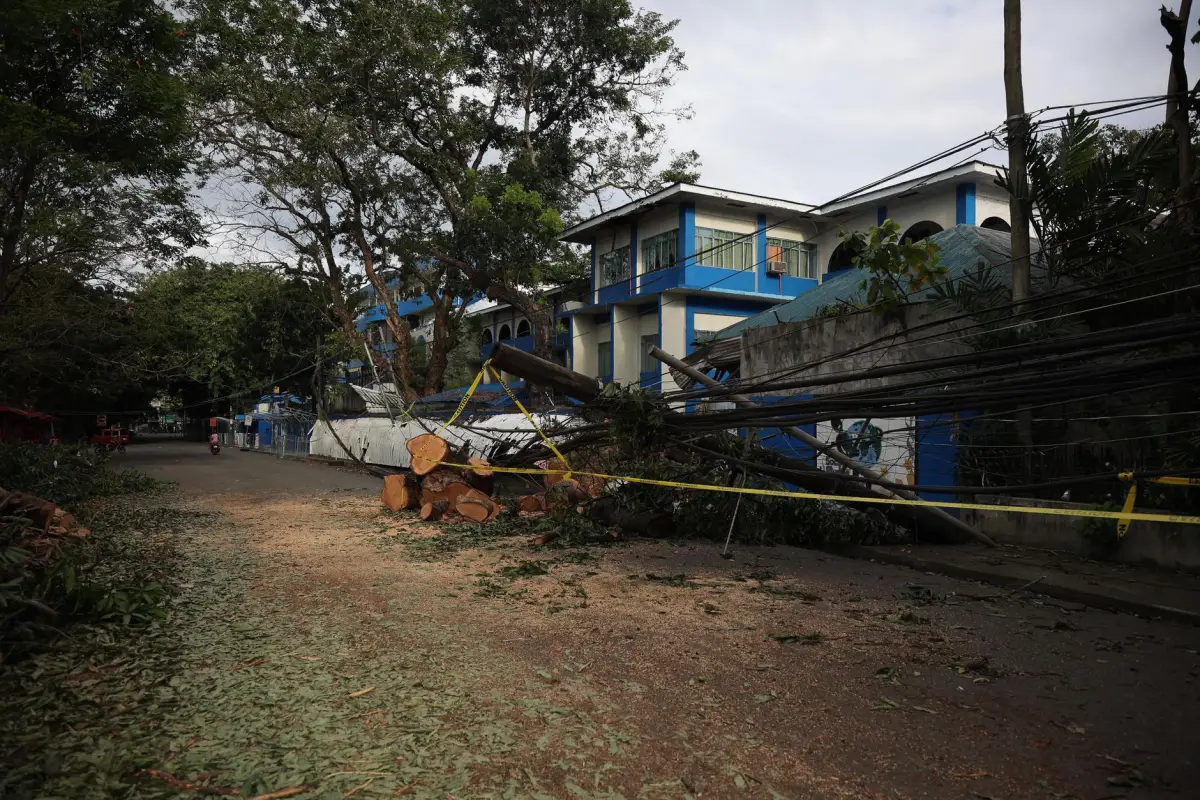
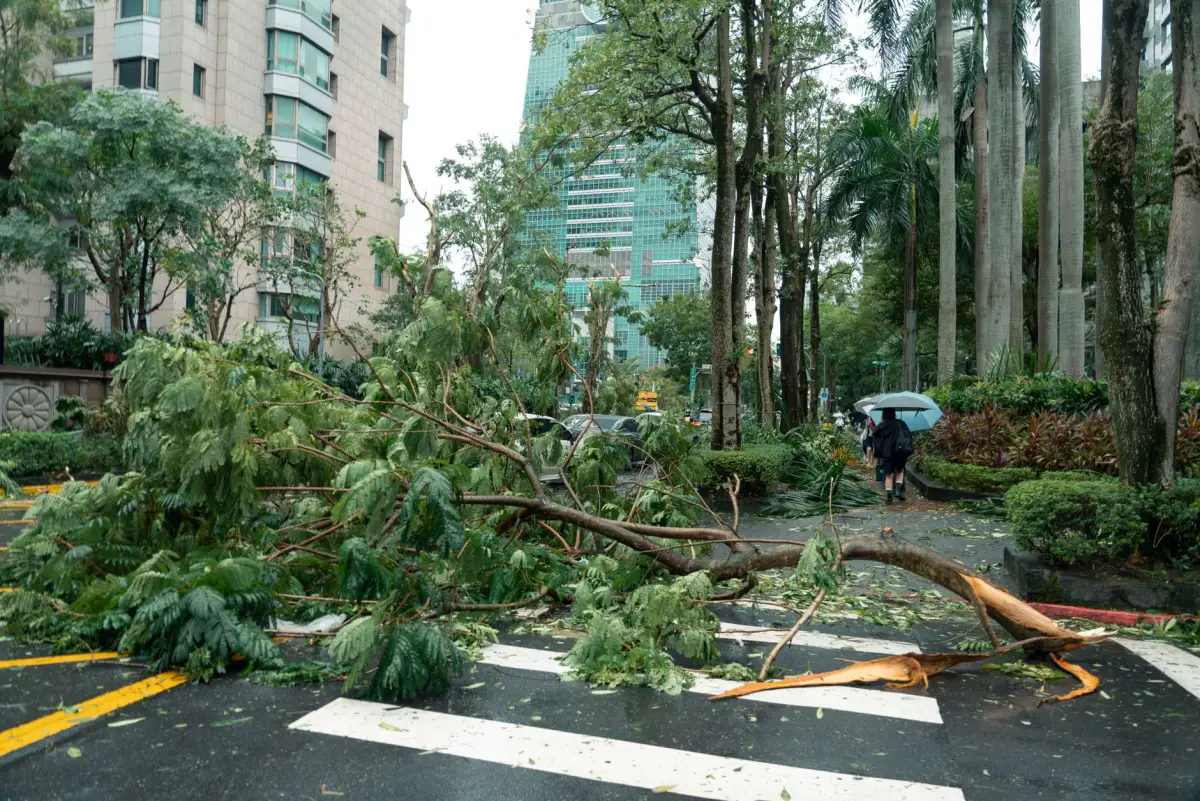
A tree already down is not automatically safe, and on commercial property it is usually also blocking something. A trunk still hinged to its stump, or resting on a fence, a vehicle or a building, holds enormous stored tension, and the first cut decides which way it moves. Access is the priority: entrances, drive aisles, loading areas and fire lanes get opened first, in that order of consequence. If the tree has hit a structure or a vehicle, photograph it from several angles before anything is moved — that documentation is what the claim rests on, and on commercial property there is usually a claim.
Emergency Limb & Branch Removal
Hangers — broken limbs caught up in the canopy, held by friction and nothing else — are the highest-priority item on a commercial property after a storm and the one most often missed. They come down without warning, and on a property with public access that is a liability event rather than a yard problem. Anything over an entrance, a walkway, a bus stop, an outdoor seating area or occupied parking comes out first. They are hard to see from ground level, which is why the property gets walked and looked at from more than one angle rather than assessed from a doorway.
Commercial Storm Debris Cleanup
Debris cleanup on commercial property is scheduled work and should be priced that way, not at emergency rates because it happens to follow a storm. The scope is volume: trunks bucked and loaded, brush chipped, hard surfaces swept so nothing is left where people walk or park. Damaged survivors get their torn limbs cut back to the branch collar so the wounds can seal instead of starting decay columns. Ash is separated, since Olmsted County is under state and federal emerald ash borer quarantine and storm-downed ash cannot be taken just anywhere.
What's Included in a Commercial Emergency Call
- Assessment from a safe distance before anyone approaches the tree
- Utility involvement identified and referred to the power company first
- Entrances, drive aisles, loading areas and fire lanes reopened as the first priority
- Managed exclusion zones on property where people are arriving
- Hangers over walkways, entrances and occupied parking brought down under control
- Loaded and tensioned trunks released in a controlled sequence
- Photographs taken before anything is moved, for the insurance claim
- Debris, wood and damaged-tree pruning scheduled as a daylight return visit
When to Call Immediately
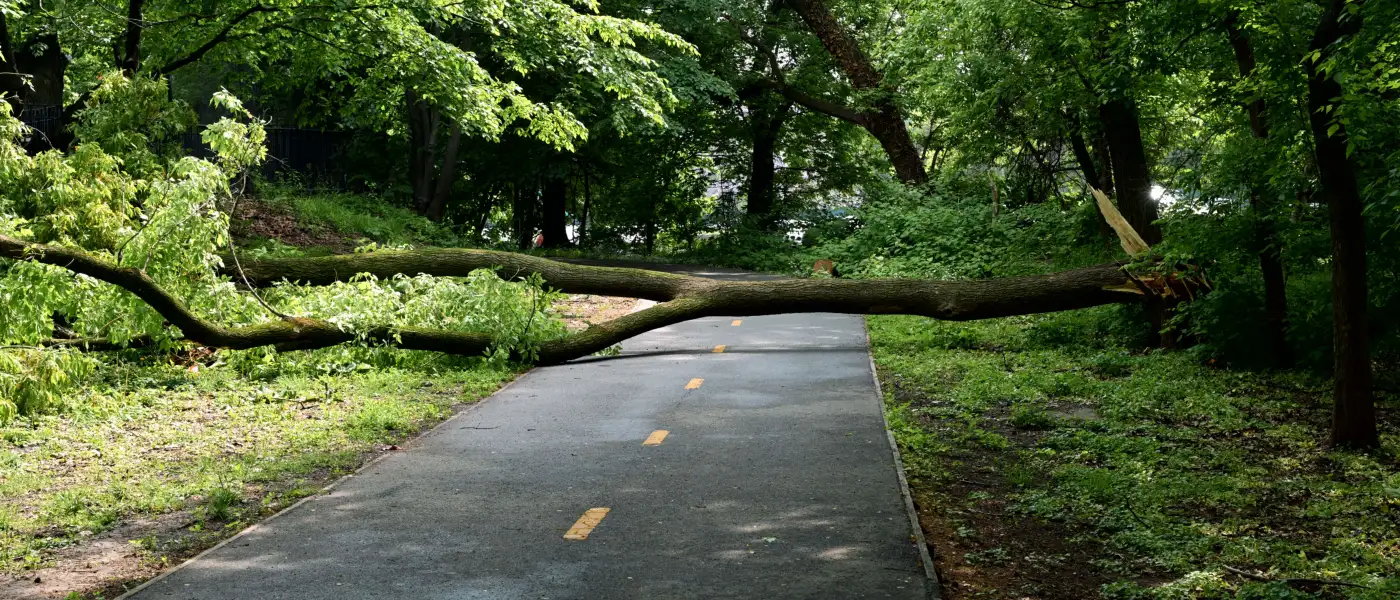
- A tree or large limb down across an entrance, drive aisle, fire lane or loading area
- A broken limb hung up in the canopy above a walkway, entrance or occupied parking
- A tree resting on a building, a vehicle, a fence or a utility structure
- A trunk that has shifted, cracked, or lifted its root plate since the weather
- A fallen trunk still attached to its stump or wedged against something
- Tree contact with the service line running into your building
- Anything overhead on a property the public has access to
How a Commercial Emergency Call Actually Goes
- 1
Assessing the site and setting priorities
The first pass on a commercial site is a read of the whole property rather than one tree, because the question is what has to be fixed first. Access comes first by consequence — entrances, drive aisles, fire lanes and loading areas. Then overhead exposure: anything hanging above a walkway, an entrance, or occupied parking, since a public-access property carries that risk every hour it stays. The assessment itself happens from a safe distance: what is bearing on what, where compression and tension sit in each trunk, whether the root plate is still moving, and whether a line is involved. If a line is energised, the utility gets the call before a saw runs.
- 2
Reopening access and clearing what's overhead
The first working pass is a make-safe, not a completion. Exclusion zones get established and actively managed, because on commercial property people arrive whether or not the site is ready for them, and cones alone do not stop someone walking to a door. Hangers come out first, since everything else happens underneath them. Then load gets released off whatever is bearing it — a trunk on a building or a vehicle gets sections rigged and lowered from the far end inward so the weight comes off gradually rather than shifting all at once. Access is cleared in priority order. At that point the property can open.
- 3
Documenting it and notifying who needs to know
On commercial property there is nearly always a claim, so what gets photographed before anything moves has real value. Wide shots establishing the tree, the damage and their relationship; then close shots of the point of impact, the trunk failure and the root plate. Where a tenant's premises or vehicles are affected, the property manager's notification obligations usually start immediately, which is easier with a documented scene. Emergency make-safe work is invoiced separately from the scheduled follow-up, which keeps the claim clean and stops scheduled cleanup being billed at emergency rates.
- 4
The scheduled return: debris and damaged trees
The return visit in daylight is where the real volume happens. Downed trunks get bucked and loaded, brush is chipped continuously, and hard surfaces are swept because chips and sawdust on a parking surface are a slip complaint. Damaged survivors get finished properly: torn limbs cut back to the branch collar so the tree can seal the wound rather than leaving a ragged stub that starts a decay column. If an oak needs cutting between April and July, the DNR's rule applies and the cut is sealed immediately. Ash is separated and taken somewhere that can legally accept it under the county quarantine.
What Does Commercial Emergency Tree Service Cost in Rochester, MN?
- Whether it's a true make-safe now or work that can be scheduled for daylight
- Time of day and day of week, since after-hours response carries a premium
- How much of the property has to be made accessible before opening
- What the tree is resting on — a building or vehicle means rigging every piece off
- Stored tension in the wood and how many stages the release takes
- Number and height of hangers over public-access areas
- Volume of debris on the scheduled return visit
- Ash content, which is restricted on disposal under the county quarantine
The way to keep a commercial storm bill defensible is to split it. Emergency response — reopening access and clearing what is overhead — is genuinely unscheduled work at unscheduled rates. Debris cleanup, wood removal and pruning damaged survivors are scheduled work and should be quoted at scheduled rates, even though they follow the same storm. A single blended emergency rate across both is where post-storm invoices get large without anyone being able to point at why.
What to Look for in a Rochester Emergency Tree Contractor
Access first, debris later
Getting the property open and safe is the emergency. The wood on the ground is not, and it shouldn't be billed as though it were.
Exclusion zones actively managed
On a property people are arriving at, cones don't stop someone walking to a door. Someone holds the boundary while cutting happens.
Documented before anything moves
On commercial property there's nearly always a claim. The photographs taken before the first cut are what it rests on.
Two invoices, not one blended rate
Emergency response and scheduled cleanup are different work at different rates. Blending them is how a storm invoice gets large without an explanation.
Triage before removals get quoted
A tree that lost one limb cleanly usually recovers. Storms cost managed properties trees that were never actually finished.
Property Types We Cover
Residential
Emergency work at a house is covered on the residential emergency tree service page, and post-storm yard cleanup on the storm damage cleanup page.
Commercial
This covers retail and office property, industrial and institutional sites, and managed lots. Multi-family and HOA property, with its own notice and approval requirements, is covered on the HOA tree services page.
When It Isn't an Emergency
- The weather has passed, access is clear, nothing is hanging, and there's debris across the grounds. That's scheduled cleanup and should be priced as scheduled cleanup, not as an emergency.
- A tree or limb is on the primary power lines along the street. Call the utility — that's their work, at no cost to you, and a tree crew should not be first on that scene.
- The tree came down on landscaped ground and hit nothing. It's not urgent, and it likely isn't a claim either.
- It's the boulevard tree in front of your building. Those are city trees — call Rochester Forestry at 507-328-2515.
- Someone turned up unsolicited after the storm wanting a signed authorisation on the spot. Get a written scope from a contractor you called.
Frequently Asked Questions
- How fast can someone get to a commercial property after a storm?
- After-hours and weekend calls are taken, and commercial access problems are prioritised. What cannot be honestly promised is a fixed arrival window, because a single straight-line wind event through Southeast Minnesota generates a large number of calls at once and response depends on what is already in progress. If a specific timeframe matters, ask when you call rather than assuming one.
- What should a property manager do first after a tree comes down?
- Keep people away from the affected area and from any downed lines, treating every line as live. Photograph the scene from several angles before anything is moved, since that documentation supports the claim and any tenant notifications. Then call the utility if lines are involved and a tree service for the rest. Do not have maintenance staff start cutting — a trunk resting on a structure is holding load and cutting in the wrong order shifts it.
- Should emergency work and cleanup be on the same invoice?
- Better as two. Reopening access and clearing overhead hazards is genuinely unscheduled work at unscheduled rates. Debris removal, hauling and pruning damaged survivors are scheduled work and should be quoted at scheduled rates even though the same storm caused both. Separating them keeps the insurance claim clean and stops a week of ordinary cleanup being billed at emergency rates.
- Who is liable for a limb that falls on a customer's car?
- Generally the property owner, and considerably more so if the tree's condition was known and not acted on. That is the practical argument for dated inspection records and a maintenance cycle — they turn tree condition from an open exposure into a documented, managed one. Rochester also enforces hazard trees directly, giving an owner 20 days from written notice before the city removes the tree at the owner's expense plus a $37.50 administrative fee.
- Can the property stay open while emergency work happens?
- Usually in part. The priority is reopening entrances, drive aisles and fire lanes, and that is normally achievable while the rest of the work is fenced off. What is not negotiable is a genuine, actively managed exclusion zone around anything being cut — on a property where people are arriving, that means someone holding the boundary rather than relying on cones. Sections reopen as they are cleared.
- Which storm-damaged trees actually need removing?
- Fewer than it looks like the morning after. A tree that lost one large limb cleanly and kept most of its crown generally recovers once the tear is cut back properly. A tree that has lost more than roughly half its crown, split down the trunk, or lifted its root plate is usually finished. The middle cases genuinely go either way and need someone looking at the specific tree — which on managed property is worth having in writing.
Learn More
- City of Rochester — High Risk Trees & Standing Dead Trees — the 20-day hazard notice, the administrative fee, and the city's standard for a public threat
- Minnesota DNR — Tree Care — state guidance on assessing storm-damaged trees and deciding what's worth keeping
- Minnesota Department of Agriculture — Emerald Ash Borer Quarantine — where storm-downed ash can legally be taken from a quarantined county
Need Commercial Emergency Tree Service in Rochester, MN?
Describe what’s going on and get an on-site estimate — no charge for the visit, and no obligation to book the work.
Get My Free Estimate