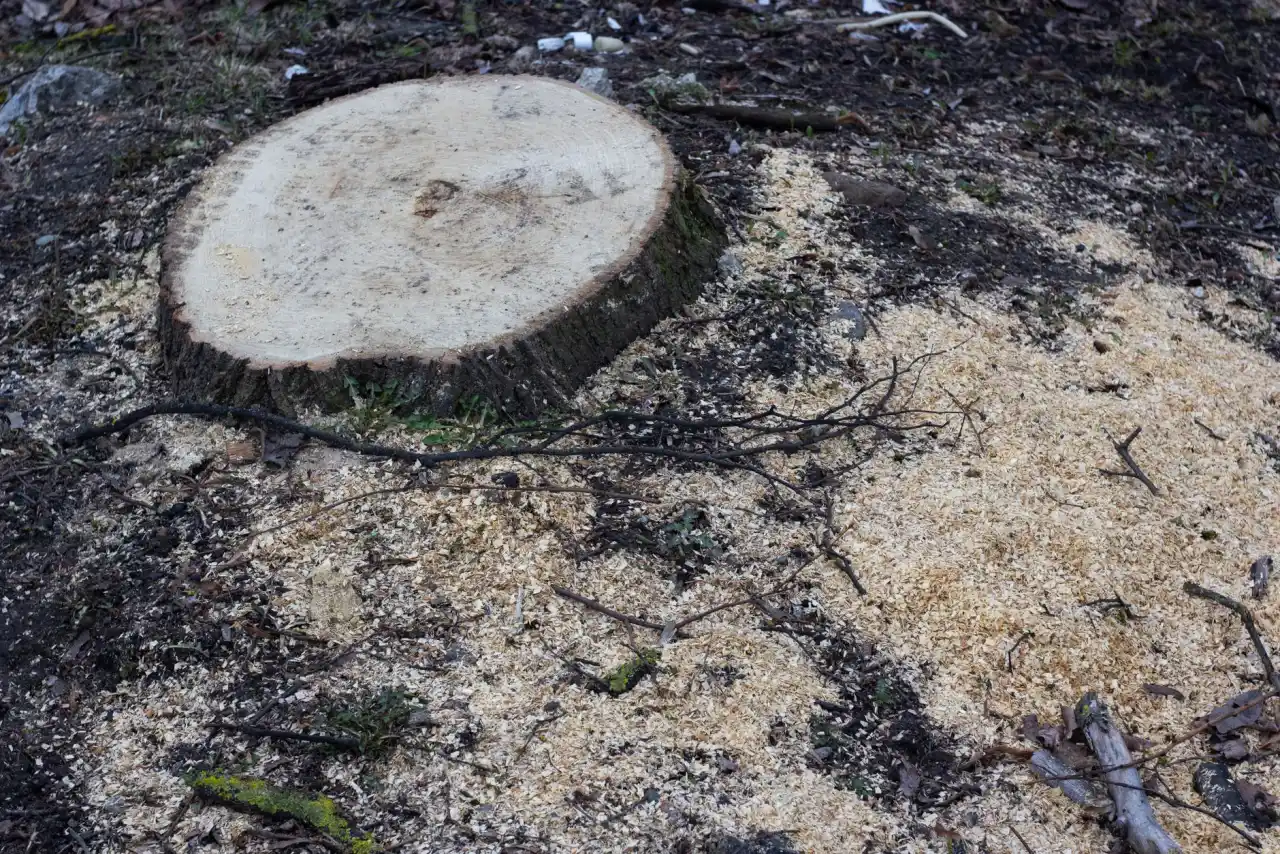
Stump Grinding in Rochester, MN — Grinding, Removal & Surface Roots
Ground below grade so you can mow over it, or dug out entirely if you're planting or building on the spot. Two different jobs, two different prices.
Rochester Elite Treecare is your local resource for stump grinding and stump removal across Rochester, Olmsted County and Southeast Minnesota. We work with tree care professionals who will tell you plainly whether you need the stump ground, dug out, or left where it is.
Grinding and removal are not the same service, and the difference is worth understanding before you get a quote. Grinding chews the stump into chips from the top down, typically to somewhere between four and twelve inches below grade depending on what you plan to do with the spot. The root system stays in the ground and decays over the following years. Removal means extracting the stump and the major roots outright — far more disturbance, a much bigger hole, and a noticeably bigger bill.
For most Rochester yards, grinding is the right answer, because the goal is usually just to mow over the spot and be done with it. Removal earns its cost when something is going in that hole: a footing, a fence line, a patio, a driveway extension, or a replacement tree that needs real root room. One thing worth knowing on either job is that the city's hazard-tree ordinance does not require stump removal at all — leaving it is legal, and sometimes it is the honest recommendation.
Stump Grinding & Removal in Rochester, MN
Residential Stump Grinding
The standard yard job: the stump gets ground down past grade so grass can be re-established and a mower can pass over it without catching. How deep depends entirely on what happens next. Four to six inches below grade is enough for turf. If you are laying sod or planting anything, deeper is better, because a shallow grind leaves a shelf of wood a few inches down that roots hit and topsoil settles over unevenly. Say what the spot is for before the work starts — it changes the depth, and depth is most of the cost.
Complete Stump Removal
Full removal takes out the stump and the major roots instead of grinding the top off, which means excavation, a real hole, and disturbed ground around it. It costs substantially more than grinding and it makes a mess of the surrounding lawn. It is the right call in specific cases: you are pouring a footing or a slab there, running a fence line or utilities through it, building a patio or driveway, or planting a replacement tree that needs uncontested root room. For anything short of that, grinding does the same job for less money and far less disruption.
Large Tree Stump Grinding
Big stumps are not simply slower — they are a different setup. A wide stump from a mature oak or cottonwood may be four feet across with a root flare spreading well beyond that, so the grind area is much larger than the stump looks from above. Access becomes the constraint, because a machine big enough to be efficient may not fit through a standard gate, and on the ravine and bluff lots around the Zumbro valley it may not get down the slope at all. Large stumps also produce a genuinely surprising volume of grindings, which turns disposal into its own line item.
Surface Root Removal
Surface roots are the ones ridging up through the lawn, lifting a walkway or catching the mower — common with silver maple and older ash. Some of them can be ground out along with the stump, and where the tree is gone that is straightforward. Where the tree is staying, this needs care: cutting significant roots off a live tree removes both anchorage and water uptake, and taking too many is how a healthy-looking tree ends up unstable. A reasonable arborist will map which roots can go and which ones are holding the tree up, rather than grinding everything visible.
Stump Cleanup & Site Preparation
Grinding produces a pile of wood chips and soil mixed together, usually far more volume than the stump appeared to hold, because ground wood expands. There are three normal outcomes and they cost differently: leave the grindings mounded over the hole to settle, rake them level and backfill with topsoil, or haul them off entirely and bring in clean fill. If you are seeding or sodding, hauling and backfilling with topsoil is the option that actually works — grindings are low in nitrogen as they break down and turf struggles in them. Say which one you want before the quote.
What's Included in a Stump Grinding Job
- On-site check of stump size, root flare spread, and machine access
- Utility locate arranged before any grinding starts
- Grinding to a stated depth below grade, set by what the spot is for
- Surface roots ground out where they're part of the same stump
- Grindings mounded, raked level, or hauled off — your call, priced separately
- Backfill with topsoil where the spot is being seeded or sodded
- Work area raked and blown clean
- Full excavation quoted separately where a footing, fence or planting needs it
Signs You Should Deal With a Stump
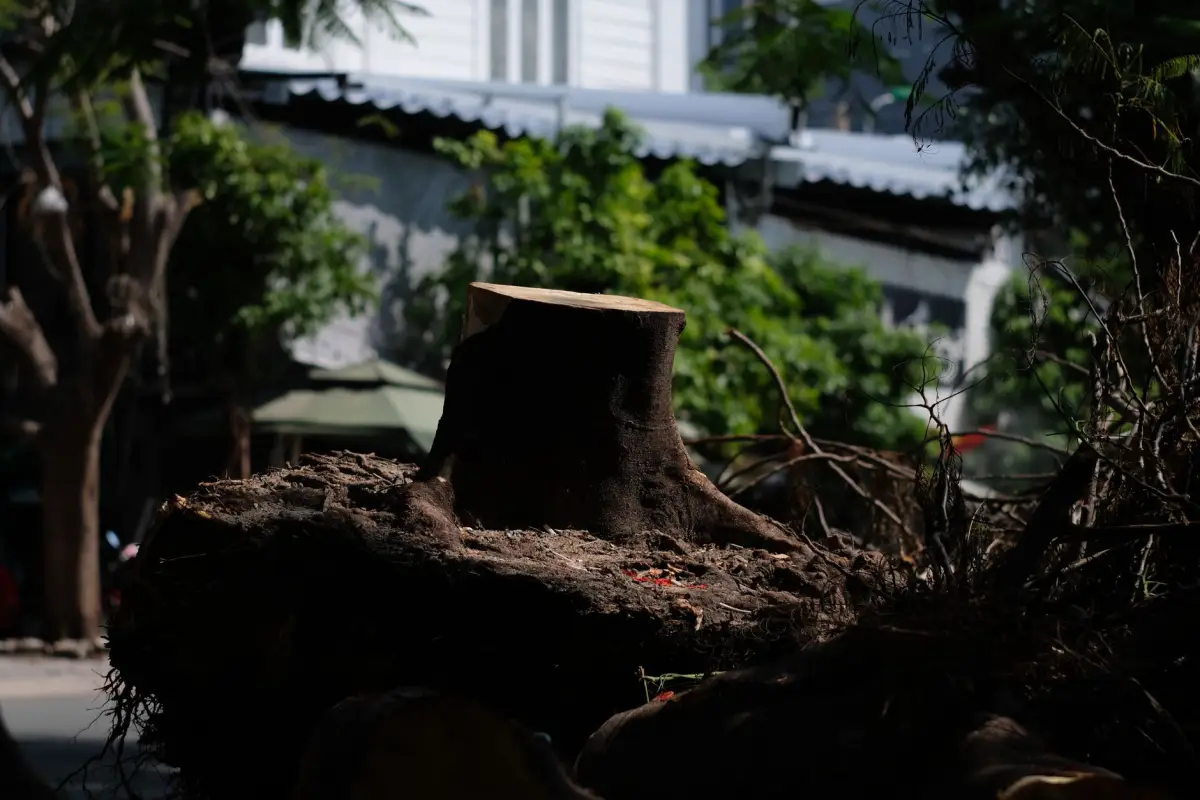
- You catch the mower on it, or you mow around it every week
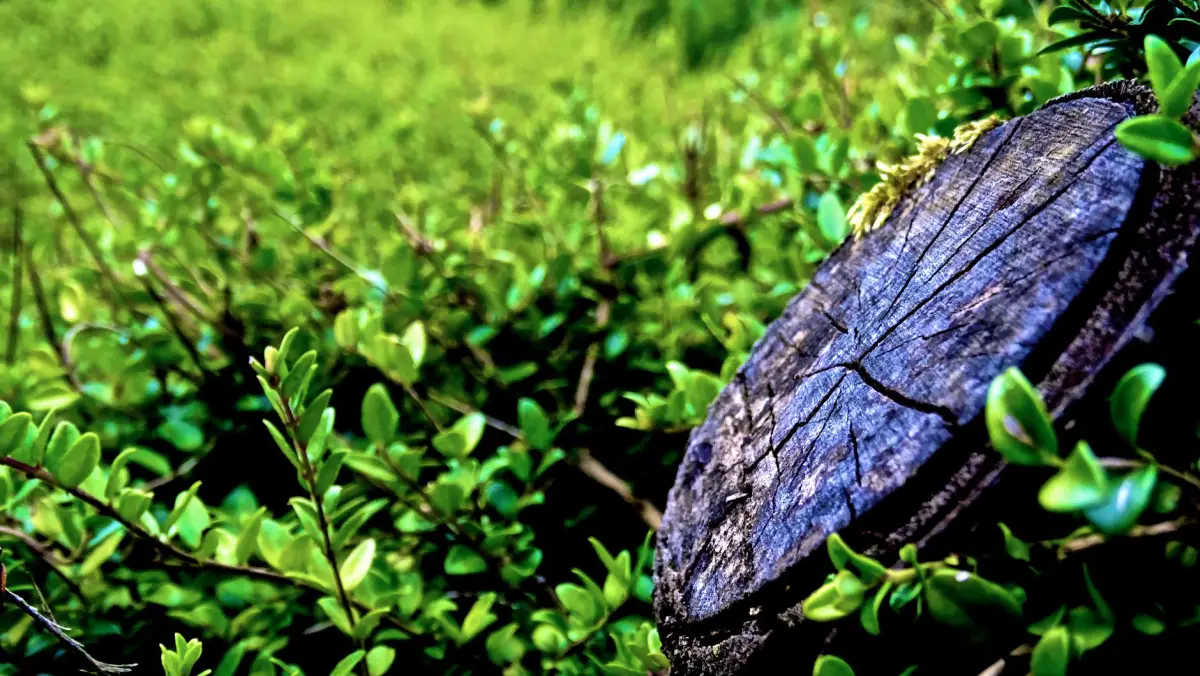
- Shelf fungus or mushrooms are fruiting on the stump — decay fungi are established
- Suckers keep sprouting from the stump or the root flare
- The spot is where a fence post, shed, patio or replacement tree needs to go
- Carpenter ants or other insects are working in the softening wood
- Surface roots from the stump are lifting a walk or ridging through the lawn
- It's an oak stump and there are other oaks close by, where root grafts can carry disease
How Stump Grinding Actually Goes
- 1
Sizing the job and getting utilities located
A stump quote starts with two measurements people rarely think about: the width across the root flare rather than the trunk, and the width of the tightest gap the machine has to pass through. A stump that measures thirty inches at the cut can have a flare spreading five feet, and the whole flare is what gets ground. Then access — gate width, slope, soft ground, and whether there is anything the machine has to cross that will rut. Before anything runs, utilities get located, because grinding happens exactly where buried lines like to be: irrigation, invisible fence, gas service, cable, and water. That locate is not optional and it is not a formality.
- 2
Setting the grind depth to the plan for the spot
Depth is a decision, not a default, and it is most of what separates two quotes on the same stump. Four to six inches below grade is enough to re-establish turf and mow over. Eight to twelve inches or more is what planting, sodding, or anything structural needs, because a shallow grind leaves a wood shelf that new roots run into and topsoil settles unevenly over. Going deeper costs more — more passes, more grindings, more disposal. The efficient conversation is to say what the area is going to be used for and let the depth follow from that, rather than agreeing a price and discovering later that the spot cannot take a shrub.
- 3
Grinding out the stump and the flare
The machine works the stump in horizontal passes, sweeping the cutting wheel across the face and taking material down in layers rather than plunging into it. The root flare gets worked out along with the stump, since leaving the flare is what produces the ring of hard wood that shows up a year later when the mound settles. Rocks are the real hazard — grinding wheels throw them, so the work area gets screened and anything in throwing range of a window or a car gets protected or moved. On a large oak or cottonwood the grind area ends up considerably wider than the stump looked from standing height, which is normal and is why the flare measurement matters at quoting time.
- 4
Backfill, grindings, and what the spot looks like after
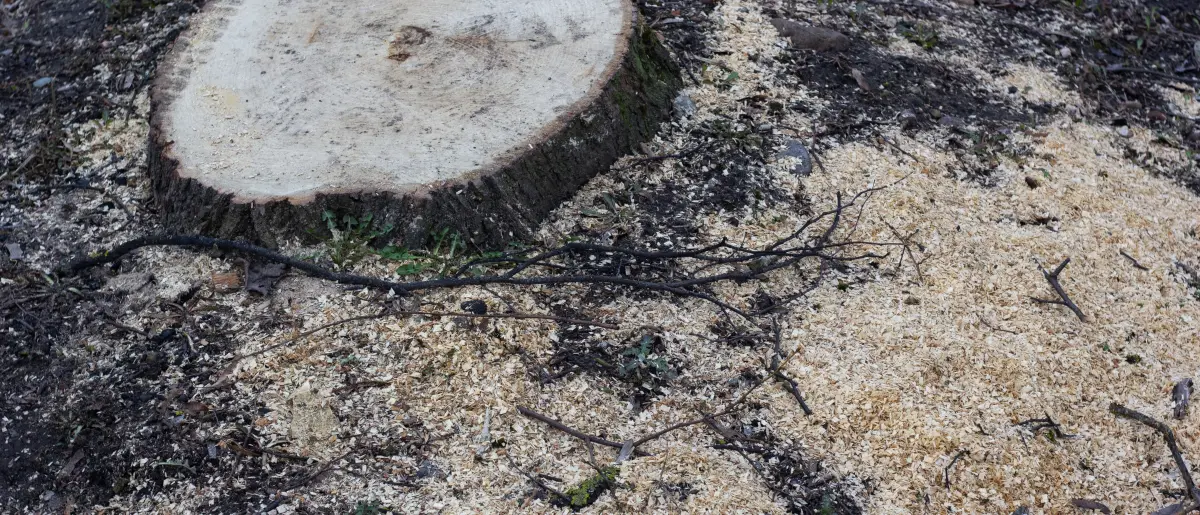
Grinding produces far more volume than the stump held, because ground wood expands. Three outcomes, priced differently: mound the grindings and let them settle, rake them level and cap with topsoil, or haul them off and bring in clean fill. If the plan is grass, hauling and backfilling with topsoil is the only version that reliably works — grindings tie up nitrogen as they decompose and turf sulks in them for a season or two. Expect the spot to settle over the following months regardless, which is normal and usually needs one topping-up pass. Then the area gets raked and blown, and any grindings thrown into beds get cleared out.
What Does Stump Grinding Cost in Rochester, MN?
- Diameter across the root flare, not the trunk — the flare is what actually gets ground
- Grind depth, which follows from whether the spot is for turf, planting, or a structure
- Machine access: gate width, slope, and soft ground are what rule out the efficient machine
- Hardness of the wood; oak grinds slower than a softer species of the same size
- How many surface roots come out with it
- What happens to the grindings — mounded, backfilled with topsoil, or hauled away
- Whether it's grinding or full excavation, which is a different job at a different price
- Number of stumps, since a machine already on site prices the second one better
The two quotes that look different on the same stump usually differ on depth and on grindings, not on the stump. A four-inch grind with the chips mounded over the hole is a genuinely cheaper job than a twelve-inch grind hauled off and backfilled with topsoil, and only one of them lets you plant there. Ask both questions before comparing numbers. Also expect settling — the spot will sink over the following months as what's left underground breaks down.
What to Look for in a Rochester Stump Grinding Company
Utilities located before the wheel turns
Grinding happens exactly where irrigation, invisible fence and service lines get buried. The locate comes first, every time.
Depth set by what the spot is for
Turf, sod, planting and footings need different depths. Naming the plan first is what stops a shallow grind from becoming a problem next spring.
The grindings question answered up front
Mounded, backfilled or hauled — three prices. A quote that doesn't say which one it includes isn't comparable to one that does.
The flare measured, not the trunk
A thirty-inch stump can have a five-foot flare, and the flare is what gets ground. Quoting off the trunk is how a job runs over.
A straight answer on grinding versus digging
Full excavation costs much more and tears up the surrounding lawn. It's worth it for a footing or a replacement tree, and not worth it for a spot you just want to mow.
Residential and Commercial Stump Grinding
Residential
Residential stump work is usually one or two stumps left from a removal, ground below grade so the lawn can go back over the spot. Priced per stump after an on-site look at the flare and the access route.
Commercial
On commercial sites stumps tend to come in quantity and on a schedule — a lot being repaved, a row of failed trees in an island, or clearing ahead of construction. Multi-stump and site-prep work is covered under commercial land clearing.
When Grinding Isn't Worth It
- You don't actually need the stump gone. Rochester's hazard-tree ordinance covers trees, not stumps — the city does not require removal. If it's in a back corner nobody mows, leaving it is a legitimate option.
- The stump is on the boulevard between sidewalk and street. That's a city tree, and boulevard work goes through Rochester Forestry with a permit — call 507-328-2515 first.
- You want the roots gone from under a live tree to fix surface rooting. Cutting major roots off a standing tree costs it anchorage and water uptake, and that trade is rarely worth making.
- It's a small stump under about six inches and you own a mattock. That's an afternoon of digging, not a machine and a mobilisation fee.
- You're hoping chemical stump killer will do it instead. It doesn't remove anything — it just speeds decay a little, and you're still left with the stump for years.
Frequently Asked Questions
- How deep should a stump be ground?
- It depends on the plan for the spot. Four to six inches below grade is enough to re-establish turf and mow over it. If you are laying sod, planting a shrub or a replacement tree, or putting in anything structural, you want eight to twelve inches or more, because a shallow grind leaves a shelf of wood that new roots hit and that topsoil settles unevenly over. Decide the use first — the depth follows from it.
- What's the difference between stump grinding and stump removal?
- Grinding chews the stump into chips from the top down and leaves the root system in the ground to decay. Removal excavates the stump and major roots outright. Grinding is faster, cheaper and far less disruptive to the surrounding lawn, and it is the right answer for most yards. Removal is worth its cost when a footing, fence line, patio, driveway or replacement tree needs that ground clear.
- What happens to all the wood chips?
- There are more of them than you expect, because ground wood expands well beyond the volume of the stump. You have three options at three prices: leave them mounded over the hole to settle, rake them level and cap with topsoil, or haul them off and backfill with clean fill. If the spot is going to be grass, haul and backfill — grindings tie up nitrogen as they break down and turf struggles in them.
- Can I plant a new tree where the old one was?
- Not directly in the ground stump, and not into grindings. You need the stump ground deep, the grindings removed, and the hole backfilled with real soil — otherwise the new roots hit a wood shelf and sit in a medium that is actively pulling nitrogen out of the soil as it decays. The simpler option is to plant a few feet to one side, which avoids the old root mass entirely.
- Will the ground sink after stump grinding?
- Yes, and it is normal. The root system left underground keeps breaking down for years, and any grindings backfilled into the hole compact as they decompose. Expect the spot to settle over the months after the job and to need one topping-up pass with soil. If the area has to stay dead level — a patio, a walkway — that is a case for full excavation rather than grinding.
- Do you need to call before digging for a stump grind?
- Yes. Utility locates come before grinding, not as a formality. Irrigation lines, invisible pet fence, gas service, cable, and water lines all live at exactly the depths a grinder works at, and a stump sitting near a house or a property line is a good bet for at least one of them. Any legitimate operator arranges the locate as part of the job.
Learn More
- City of Rochester — Trees, Lawns & Forestry — boulevard tree rules, forestry permits, and what the city does and doesn't require of property owners
- Minnesota DNR — Tree Care — state guidance on tree health, replanting, and managing what's left after a removal
- University of Minnesota Extension — Oak Wilt in Minnesota — why oak stumps matter: root grafts between nearby oaks can carry the disease underground
Need Stump Grinding in Rochester, MN?
Describe what’s going on and get an on-site estimate — no charge for the visit, and no obligation to book the work.
Get My Free Estimate