Commercial Tree Trimming in Rochester, MN — Parking Lot & Property Clearance
Clearance over drive aisles and walkways, sightlines kept open, and pruning done to standard rather than to whatever fits in an afternoon.
Rochester Elite Treecare is your local resource for commercial tree trimming and pruning across Rochester, Olmsted County and Southeast Minnesota. We work with trusted tree care professionals who maintain trees on working property, on a cycle, without closing the site down.
Commercial trimming is mostly about clearance and sightlines. Branch height over a drive aisle so a delivery truck does not tear a limb off. Canopy off a building, a sign, or a light fixture. Crown raised over a walkway so nobody ducks. Sightlines held open at an entrance so a driver can see the sidewalk before pulling out. Each one is a specific objective, and pruning without one is how a property ends up with a row of topped lot trees.
The second thing that separates commercial work is that it is a cycle, not an event. Trees on a maintained property are cheapest to keep in condition when they are pruned every few years and most expensive when they are ignored for fifteen and then dealt with in one alarming afternoon. Lot trees make that worse, because confined root space and reflected heat off asphalt already put them under stress that a yard tree never experiences.
Commercial Tree Trimming & Pruning in Rochester, MN
Routine Commercial Tree Trimming
Routine work on a cycle is what keeps a property's trees from becoming a project. The scope is deadwood, crossing and rubbing branches, water sprouts, and anything growing back into the centre — plus whatever clearance the site needs that year. A realistic cycle on established commercial trees is every three to five years, shorter where trees sit over drive aisles or entrances. The standing limit applies here as everywhere: no more than about a quarter of the live crown off a healthy mature tree in one season, and less on the stressed ones, which on a parking lot is most of them.
Parking Lot Tree Trimming
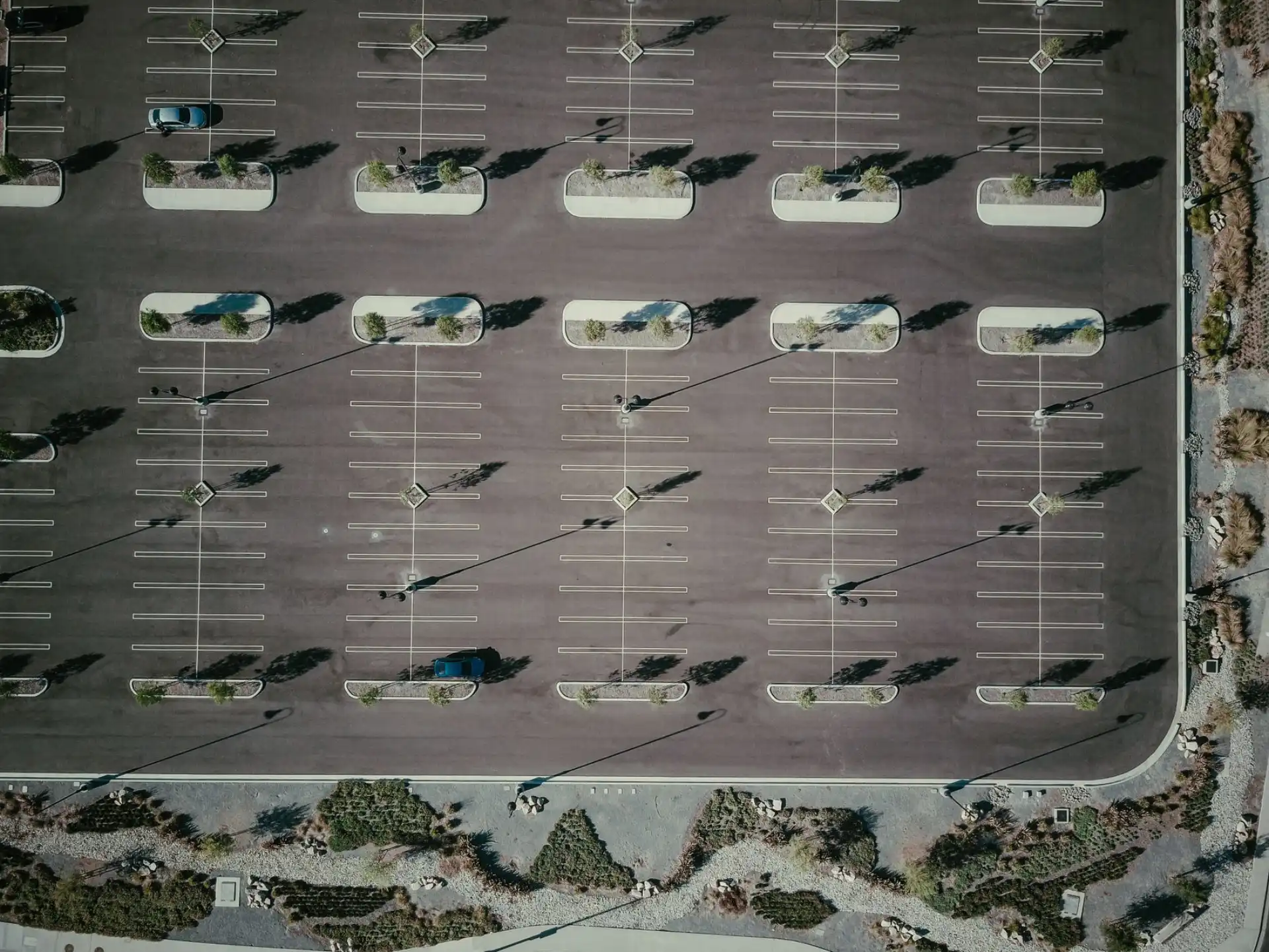
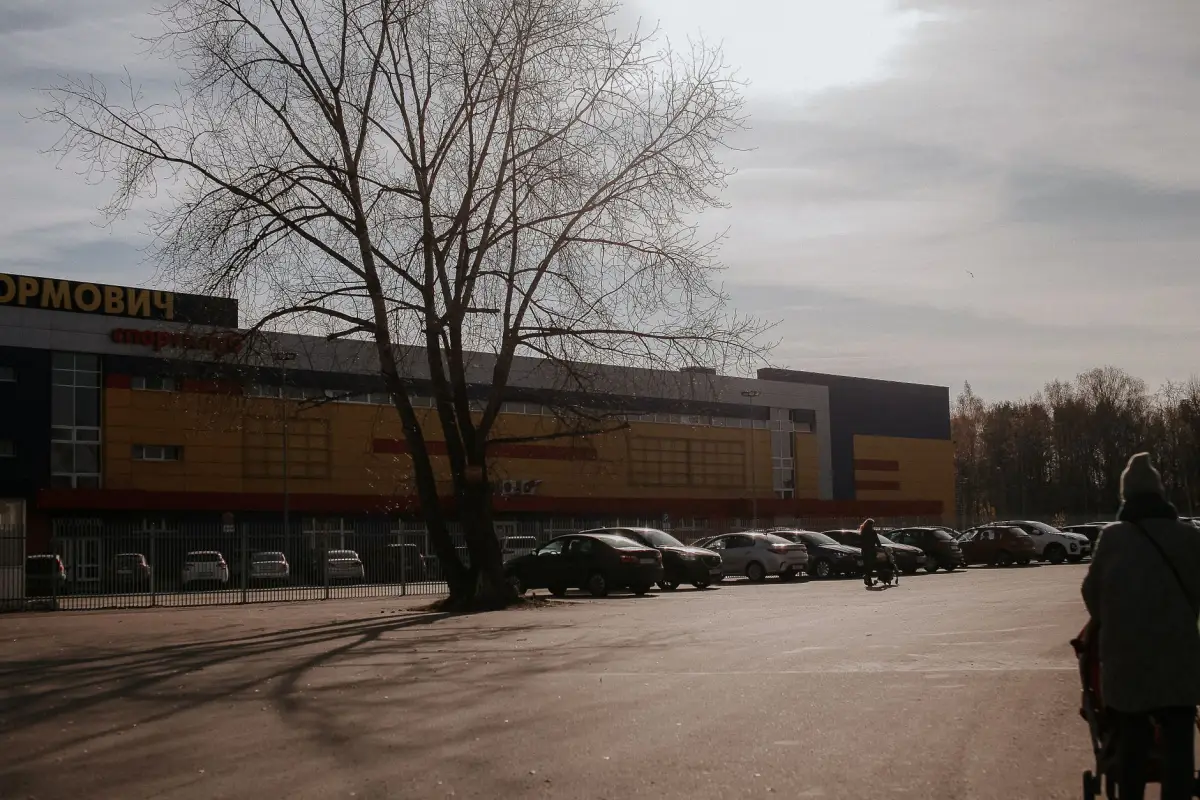
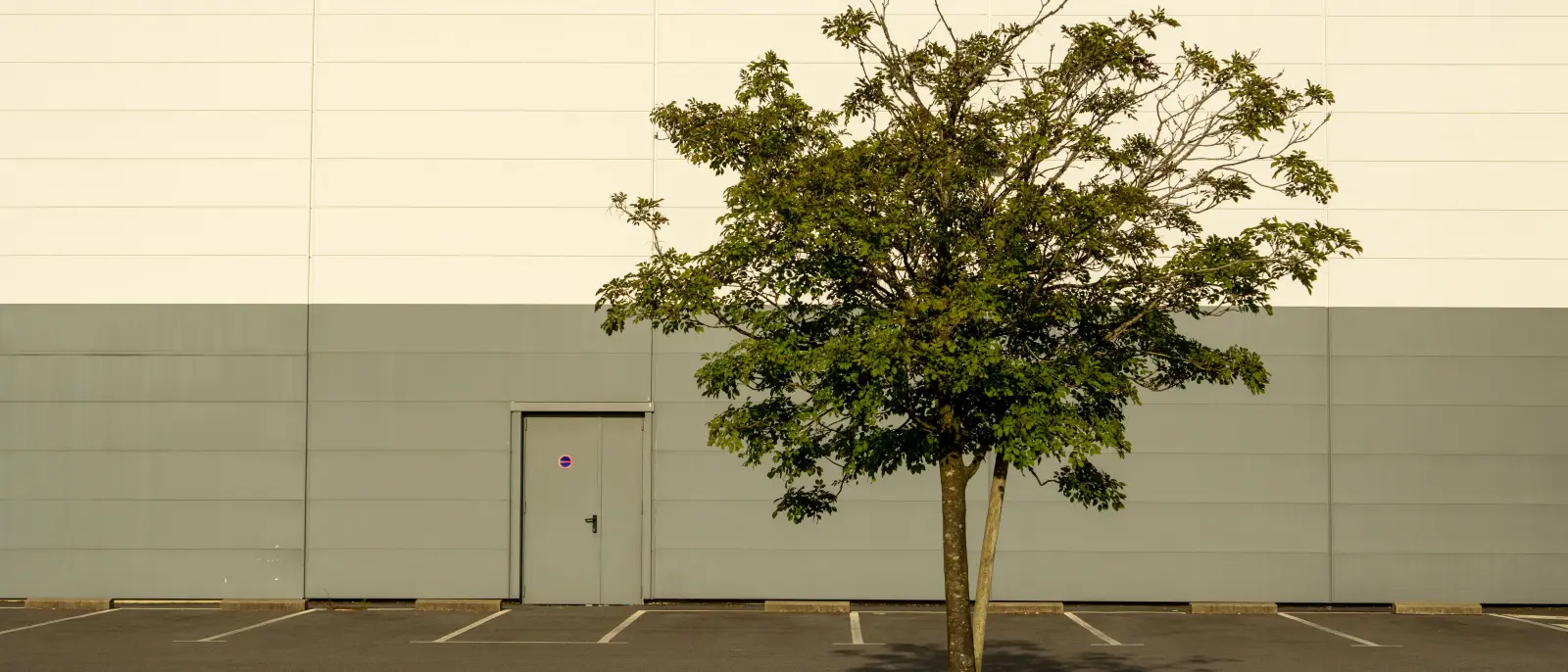
Lot trees are working under conditions no yard tree faces: root volume boxed in by curbing, reflected heat off asphalt, road salt in the runoff, and soil that has usually been compacted since the lot was built. They stress earlier and hold deadwood more readily, which is why they need attention on a shorter cycle rather than a longer one. The pruning itself is clearance-driven — branch height over stalls and drive aisles, canopy kept off lighting so the lot stays lit, and deadwood out before it lands on a customer's car. The failure mode to avoid is having them topped to a uniform height, which produces weak regrowth on decaying stubs.
Tree Clearance Around Commercial Buildings
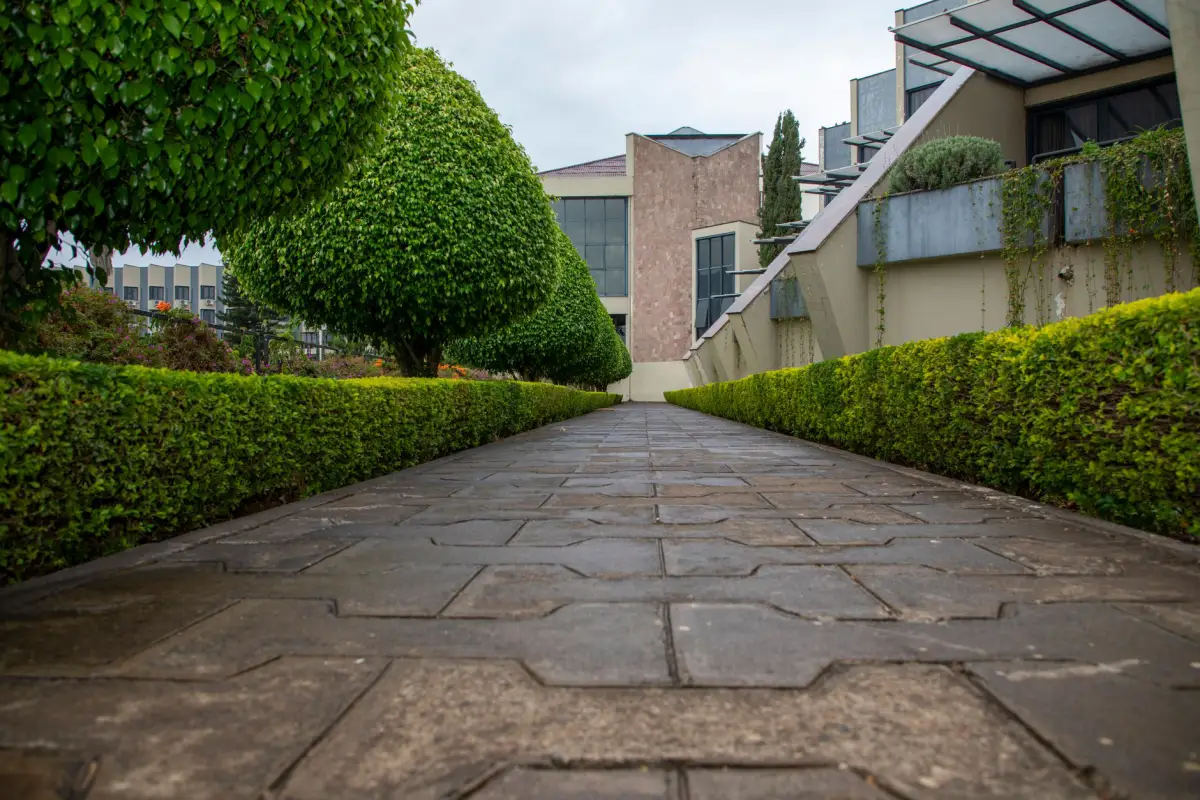
Canopy against a building causes problems that have nothing to do with the tree. Limbs on a roof abrade the membrane and hold moisture against it, branches into gutters block them, growth against siding traps damp, and canopy over an entrance drops litter where people walk. Clearance pruning pulls the crown back from the structure to a working distance so it does not need doing again next year. Two things constrain it: service lines and rooftop equipment dictate where limbs can be lowered, and taking too much off one side to clear a building is how a tree ends up visibly lopsided and mechanically unbalanced.
Branch Clearance Over Roads & Walkways
Clearance over vehicle and pedestrian routes is the most common commercial trimming request and the one with the clearest liability attached. Drive aisles need enough height for delivery and service vehicles, which is considerably more than a car needs — a torn limb from a box truck is both damage and a hazard. Walkways need enough that nobody ducks and nothing catches. Achieving it is a crown raise: removing lower limbs and shortening others back to laterals, done gradually enough that the tree is not stripped of its lower canopy in one season.
Commercial Property Tree Maintenance
Maintaining a property's trees as a programme rather than a series of reactions is what makes the budget predictable. That means an inventory of what is there and its condition, a cycle for each group, and priorities that reflect actual risk — trees over walkways and entrances before trees at the back of a lot. Ash across Olmsted County belong in that plan explicitly, since EAB has been confirmed here since 2014 and declining ash need a decision rather than another pruning visit. A programme also produces the dated records that matter if a tree ever does cause damage.
What's Included in a Commercial Trimming Visit
- A walk of the property with each tree's objective named before pruning starts
- Clearance to a defined height over drive aisles, stalls and walkways
- Canopy pulled back from buildings, signage, lighting and rooftop equipment
- Deadwood removed, prioritised over parking stalls and pedestrian routes
- Cuts made just outside the branch collar, to ANSI A300 — no topping, no lion-tailing
- Work phased so lots and entrances stay usable
- Brush chipped continuously and hard surfaces swept or blown daily
- Oak work scheduled outside the DNR's April-through-July window
Signs a Commercial Property Needs Trimming
- Delivery vehicles clipping branches on the way through a drive aisle
- Canopy blocking parking lot lighting so sections of the lot go dark
- Limbs resting on a roof, in gutters, or against signage
- Deadwood over parking stalls or a pedestrian route
- Sightlines blocked at an entrance or exit where drivers cross a sidewalk
- Lot island trees thinning, holding deadwood, or dying back at the top
- Trees that were topped previously and have thrown dense upright regrowth
How Commercial Trimming Actually Goes
- 1
Inventory, objectives and priorities
Commercial pruning starts by naming what each tree's visit is for, because "trim the lot trees" produces whatever the crew feels like doing. The walk records what is on the property, its condition, and the specific objective per tree or group: clearance over the drive aisle, deadwood over stalls, canopy off the building, sightline at the entrance. It also sets priority by exposure — trees over walkways and entrances come first, trees at the back of a lot come later. Declining ash get flagged as a separate decision rather than absorbed into a pruning scope, since pruning a failing ash is spending money on a tree that needs a removal plan.
- 2
Scheduling around the site and the season
Work gets planned against how the property runs. Busy periods, delivery windows, tenant hours and the entrances that cannot close all shape the sequence, and tenants get notice before anything near them is coned off. Season matters too: oaks fall under the Minnesota DNR's guidance not to prune or cut April through July, because sap beetles carry oak wilt to fresh cuts in that window, and risk drops after mid-July. Non-urgent oak work on a commercial property therefore belongs in the dormant season, which for a maintenance programme is easy to plan and awkward to retrofit. Most other species are far more flexible.
- 3
Access, exclusion zones and making the cuts
Hard standing is the advantage commercial sites have: a lift can usually reach the tree, which is faster and safer than climbing and lets the crew hold position on the outer crown where clearance work happens. Around each work area the exclusion zone gets coned and marked, and pedestrian routes get redirected rather than assumed. The cuts themselves follow ANSI A300 — just outside the branch collar, no flush cuts, no stub cuts. Larger limbs get an undercut, a relief cut and then a final clean cut. Spikes are not used on trees that are staying, whatever the schedule pressure, because they wound the cambium of a tree that has to live with it.
- 4
Checking the result and clearing the site
Each tree gets looked at from a distance before the crew moves on, because clearance work done from a lift can meet the height requirement and still leave the tree visibly one-sided. The checks are whether the objective was met, whether the tree is balanced, and whether live crown removal stayed inside about a quarter for the season. Then the site: brush chipped as it comes down, and every hard surface swept or blown before the crew leaves for the day, since sawdust and chips on a parking surface are a slip complaint and a stain. The visit closes with a note of what was done and what to expect next cycle.
What Does Commercial Tree Trimming Cost in Rochester, MN?
- Number and size of trees, and how much of the work sits at height
- Whether a lift can reach them from hard standing or the work has to be climbed
- The objective — deadwood, clearance and crown raising are different amounts of work
- How long since the last pruning, since neglected trees take far more cuts
- How much of the lot has to stay open, and whether work runs outside business hours
- Proximity to buildings, service lines, lighting and signage
- Season, and for oaks whether the work waits for the dormant window
- Whether it's a one-off visit or a maintenance cycle, which prices better per visit
Commercial trimming is priced much better as a cycle than as a rescue. Trees pruned every three to five years take a fraction of the cuts that the same trees take after fifteen years of nothing, and the crew is not working around defects that would have cost one cut to prevent. The other real saving is doing the whole property in one mobilisation instead of calling someone out each time a single branch becomes a nuisance.
What to Look for in a Rochester Commercial Tree Trimming Contractor
An objective per tree, written down
Clearance, deadwood, sightline and crown raise are different jobs. Naming which one applies is what makes the result predictable and the quote comparable.
No topping on lot trees
Topping a row of parking lot trees to a uniform height is fast, cheap, and leaves weak regrowth on decaying stubs. It is the most common thing done badly on commercial property.
Phased so the property stays open
A drive aisle and a few stalls at a time, with entrances kept usable. Full closures should be flagged at quoting time, not on the day.
Hard surfaces cleared daily
Chips and sawdust on a parking surface are a slip complaint and a stain. Cleanup is an end-of-day standard on commercial work.
Ash flagged as a decision, not a pruning line
EAB has been in Olmsted County since 2014. A declining ash needs a removal plan, not another maintenance visit.
Property Types We Cover
Residential
Trimming at a house is covered on the residential tree trimming page, where the work is usually clearance and deadwood on a handful of trees rather than a property-wide cycle.
Commercial
This covers retail and office property, industrial sites, institutional grounds and managed lots. Multi-family and HOA property, which carries its own approval and resident-notice requirements, is covered on the HOA tree services page.
When Trimming Isn't the Answer
- You want the lot trees topped to a uniform height. Nobody working to a standard will do it, and the regrowth is weaker and denser than what you have now.
- The branches are into the primary power lines along the street. The utility clears those at no cost to you.
- It's a healthy oak, nothing is threatening a structure, and it's May. Wait for the dormant season — cutting oaks April through July is how oak wilt moves.
- The trees are in genuine decline rather than overgrown. Pruning a failing ash is money spent on a tree that needs a removal plan instead.
- The trees are on the boulevard between the sidewalk and the street. Those are city trees and go through Rochester Forestry on a permit.
Frequently Asked Questions
- How often should commercial property trees be trimmed?
- Every three to five years for established trees in reasonable condition, and toward the shorter end where trees sit over drive aisles, entrances or walkways. Parking lot trees generally need a shorter cycle than a yard tree would, because confined root space, reflected heat and salt in the runoff stress them earlier and they hold deadwood more readily. A property on a cycle costs far less per visit than one dealt with every fifteen years.
- What clearance height do we need over a drive aisle?
- Enough for the largest vehicle that actually uses it, which on most commercial sites means delivery and service trucks rather than cars — noticeably more height than people assume when they are looking at a lot full of sedans. Walkways need enough that nobody ducks and nothing catches. Both are achieved by crown raising, done gradually across visits so the tree is not stripped of its lower canopy in a single season.
- Why do parking lot trees decline faster than yard trees?
- Because the conditions are harder in several ways at once. Root volume is boxed in by curbing, soil under and around a lot has usually been compacted since construction, asphalt reflects heat onto the canopy, and winter salt ends up in the runoff that reaches the root zone. The practical consequence for maintenance is that lot trees hold deadwood earlier and need a shorter inspection and pruning cycle than the same species in an open lawn.
- Can trimming be done without closing the parking lot?
- Almost always. The work needs a genuine exclusion zone around whatever is being cut — coned, marked, and managed while work is happening — but that is typically a drive aisle and a handful of stalls at a time rather than the whole lot. Sequencing it section by section keeps entrances open. If a specific setup does require a larger closure, that should be identified at quoting time rather than on the day.
- Is topping ever appropriate on commercial trees?
- No. It is common on commercial property because it is fast and produces a uniform look, and it is still the wrong answer. Cutting limbs back to stubs removes the branch collar, so the wound cannot seal and the stub decays, and the tree responds with dense upright shoots attached to that decaying wood. Ten years later there is more crown, worse structure and a decay column in the trunk. Crown reduction back to appropriate laterals achieves size control properly.
- Do you work outside business hours?
- Yes, where the site needs it — though on most properties phasing during normal hours is both cheaper and less disruptive than paying an after-hours premium. Where trading hours genuinely cannot absorb any lot closure, evening and weekend scheduling is available and priced accordingly. The comparison worth making is that premium against the cost of restricted access during your busiest periods.
Learn More
- Minnesota DNR — Oak Wilt Management — the April-through-July no-cut window that applies to oaks on commercial property too
- City of Rochester — Trees, Lawns & Forestry — boulevard tree rules, forestry permits, and city requirements affecting commercial frontage
- University of Minnesota Extension — Emerald Ash Borer — identifying declining ash and deciding which trees are worth keeping on a managed property
Need Commercial Tree Trimming in Rochester, MN?
Describe what’s going on and get an on-site estimate — no charge for the visit, and no obligation to book the work.
Get My Free Estimate