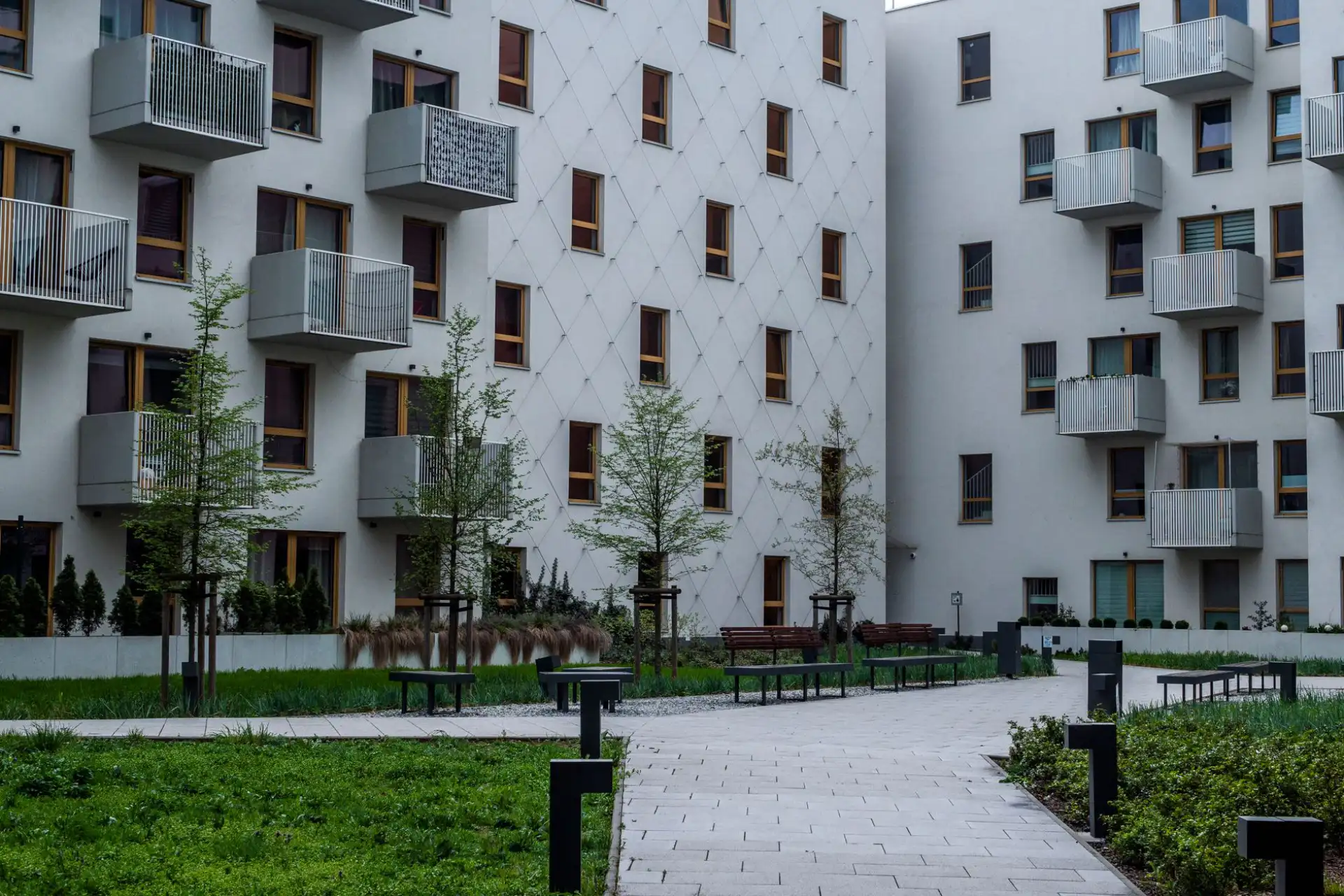
HOA & Multi-Family Tree Services in Rochester, MN
Tree work on managed property, on a documented cycle, with scopes a board can approve and notice residents actually get before a crew turns up.
Rochester Elite Treecare is your local resource for HOA and multi-family tree services across Rochester, Olmsted County and Southeast Minnesota. We work with tree care professionals who are used to board approvals, resident notice, and scopes that have to be defensible in writing.
Tree work on managed property has a second job beyond the trees: it has to survive a process. A board approves a scope it can compare against other bids. Residents get notice before their parking is coned off. Somebody keeps the records that show a hazard was inspected and acted on. Work that is technically fine and administratively vague is what generates complaints, and on a managed property the complaint is the expensive part.
The trees themselves are usually a mix — mature specimens in common areas, street-facing trees along the frontage, and lot or courtyard trees under the same stresses any commercial planting faces. Ash across the whole group deserve their own plan rather than annual attention, since emerald ash borer has been confirmed in Olmsted County since 2014 and a property with mature ash is looking at a wave of removals rather than an isolated one.
HOA & Multi-Family Tree Services in Rochester, MN
HOA Tree Trimming & Pruning
Pruning on association property works best as a documented cycle rather than a response to whoever complained most recently. A realistic interval is every three to five years on established trees, shorter where they sit over walkways, entrances or parking. The scope needs to be specific enough for a board to compare bids — which trees, what objective, what standard — because "trim the common area trees" invites three quotes that are not describing the same work. The standing constraint applies: no more than about a quarter of the live crown off a healthy mature tree in one season, and no topping, whatever a resident has requested.
Apartment & Multi-Family Tree Services
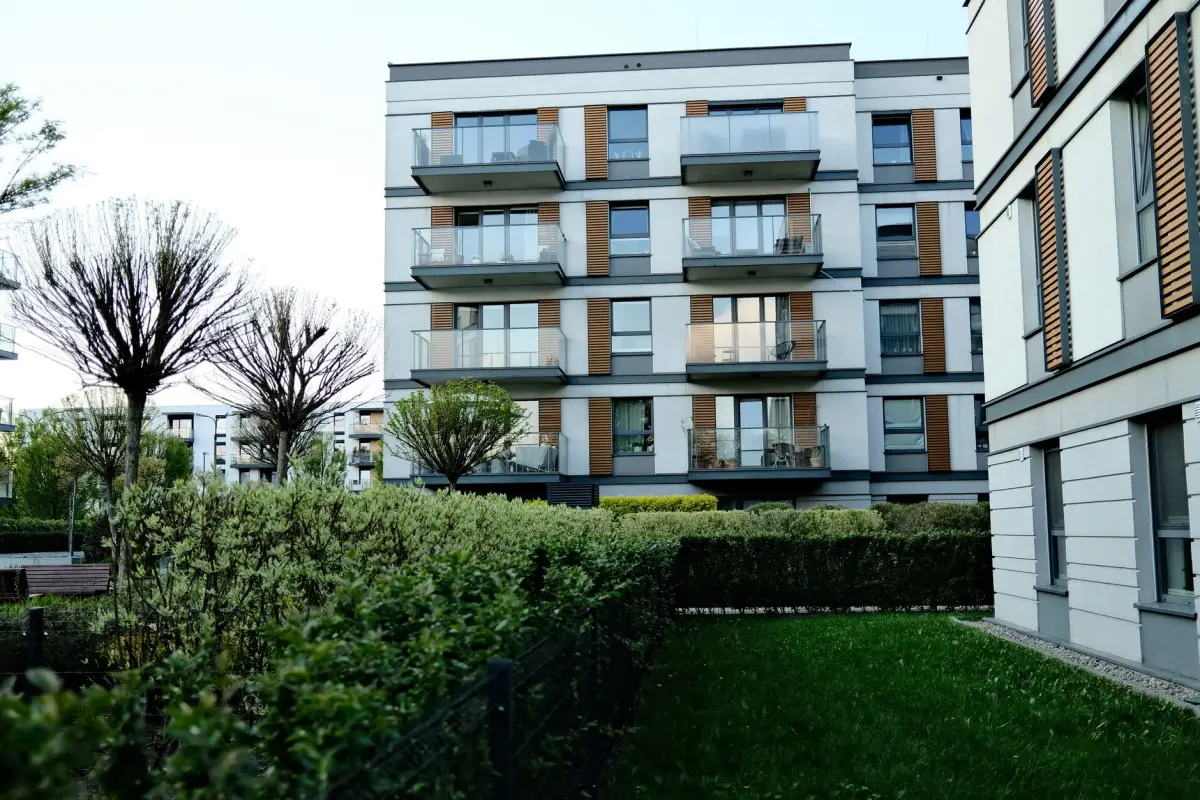
On apartment and multi-family property the practical constraints are parking and pedestrians. Residents' vehicles occupy the space a crew needs for a drop zone, and unlike a commercial lot those cars are not going anywhere unless people are told in advance. So notice periods and coned reservations are part of the job rather than a courtesy. Ground-floor patios, play areas, bin stores and building entrances all sit where limbs want to come down, and work windows generally avoid early mornings and evenings — noise complaints on residential property escalate faster than anywhere else.
Tree Removal for Managed Properties
Removals on managed property need a documented reason more than they need speed, because a removed tree is the change residents notice and object to. A written assessment naming the defect — split union, basal decay, lifted root plate, advanced ash decline — is what turns a removal from a decision into a record. Rochester also gives this teeth: after written notice on a hazardous or standing dead tree, an owner has 20 days to act before the city removes it at the owner's expense plus a $37.50 administrative fee. Where replacement is expected, that belongs in the same approval rather than a later one.
Common Area Tree Maintenance
Common areas usually hold the property's best trees and the least clarity about who is responsible for them. A workable programme starts with an inventory: what is there, its condition, and a priority driven by exposure — trees over walkways, playgrounds, parking and entrances before trees at the back of a green space. From there it is a cycle with a budget attached, which is far easier for a board to approve annually than a series of unbudgeted reactions. It also produces the dated records that matter if a tree ever does cause damage.
Storm & Emergency Tree Services for Managed Properties
After a wind event on a managed property the order is access, then anything overhead where residents walk, then debris. Hangers are the priority item and the one most often missed, because they are held by friction and come down without warning onto ground residents cross constantly. The other thing worth getting right is billing: emergency response is unscheduled work at unscheduled rates, while debris cleanup and pruning damaged survivors are scheduled work. Splitting the invoice keeps the insurance claim clean and keeps a storm from producing a bill nobody on the board can explain.
What's Included in an HOA Tree Program
- An inventory of the property's trees with condition and priority recorded
- Written scopes specific enough for a board to compare against other bids
- Resident notice before parking is reserved or areas are coned off
- Work windows that avoid early mornings and evenings on residential property
- Pruning to ANSI A300 — no topping, whatever has been requested
- Written assessments supporting any removal, with the defect named
- Dated records of inspections and the work done in response
- Ash across the property planned as a group rather than tree by tree
Signs a Managed Property Needs Attention
- Deadwood over walkways, playgrounds, parking or building entrances
- Ash across the property thinning, flaking bark, or showing woodpecker damage
- Limbs on roofs, in gutters, or against siding on any building in the group
- Residents raising the same tree repeatedly at meetings
- No record of when the common area trees were last inspected or pruned
- Sightlines blocked where a drive meets a sidewalk or a street
- Trees previously topped, now carrying dense weak regrowth
How Work on a Managed Property Actually Goes
- 1
Inventory, condition and a priority order
Work on a managed property starts with knowing what is there, because a board cannot budget against an unknown. The inventory records each tree or group, its species, rough size, condition and the defects worth tracking, then assigns priority by exposure rather than by appearance — trees over walkways, play areas, parking and entrances come before trees at the back of a green space. Ash get flagged as their own category, since emerald ash borer has been confirmed in Olmsted County since 2014 and a property with mature ash is facing a wave of decisions rather than an isolated one. What comes out is something a board can approve in stages.
- 2
Scoping it so a board can actually approve it
The scope has to be specific enough to compare, which is where most association tree bids fall apart. That means naming the trees, the objective for each — clearance, deadwood, reduction, removal — the standard the pruning follows, and what happens to the debris and any stumps. A removal carries a written assessment stating the defect, because a removed tree is what residents notice and a record is what answers them. Where replacement planting is expected, it belongs in the same approval rather than surfacing as a separate cost later. Priced by line rather than as a lump sum, a multi-year plan becomes possible instead of an annual argument.
- 3
Notice, scheduling and working around residents
On residential property, notice is part of the work. Residents need to know before their parking is reserved or their patio is coned off, and a crew arriving unannounced to cone a row of occupied stalls creates a problem the manager hears about for a week. Work windows avoid early mornings and evenings, since noise complaints escalate faster on residential property than anywhere else. Areas get sequenced so parking and entrances stay usable, and exclusion zones are actively managed rather than trusted to cones, because residents walk through their own property without reading signs. Season matters too — oak work waits for the dormant window.
- 4
Doing the work and keeping the record
The pruning itself follows ANSI A300: cuts just outside the branch collar, no flush cuts, no topping and no lion-tailing, with live crown removal held to roughly a quarter in a season on a healthy mature tree. Spikes go on removals only. Cleanup runs daily rather than at the end, because residents live there — brush chipped as it comes down and hard surfaces swept before the crew leaves. Then the part that matters administratively: a dated record of what was inspected, what was found, what was done, and what is scheduled next. That record is what turns tree condition on a managed property from an open exposure into a documented one.
What Do HOA Tree Services Cost in Rochester, MN?
- Number and size of trees across the property and how much work sits at height
- Whether a lift can reach the trees or the work has to be climbed on rope
- How long since the last cycle, since neglected trees take far more cuts
- Parking density and how much notice and coordination the site requires
- Restricted work windows to avoid early mornings and evenings
- Whether it's a one-off visit or a maintenance cycle, which prices better per visit
- Ash volume, and whether the property is on a phased replacement plan
- Whether stumps are ground and whether replacement planting is included
Associations pay the most when tree work is reactive, because reactive work is single-tree work at single-tree mobilisation cost, and it usually happens after a defect has grown expensive. A property-wide cycle with a line-item budget is cheaper per tree and far easier to approve annually. The other lever is ash: phasing removals while the wood is still sound costs meaningfully less than removing them all after they have gone brittle, and it spreads the cost across budget years instead of landing in one.
What to Look for in a Rochester HOA Tree Service Contractor
Scopes a board can compare
Named trees, named objectives, a stated standard, and line-item pricing. Three bids on "trim the common area trees" are three different jobs.
Residents told before the cones go out
Reserving occupied parking without notice is the thing that generates a week of complaints, and it is entirely avoidable.
Removals backed by a written assessment
A removed tree is what residents notice. Naming the defect in writing is what answers them, and it is the record if the tree ever mattered legally.
No topping, whoever asked for it
Requests to top a tree that shades a unit come up regularly on managed property. The answer is reduction to proper laterals, or an honest conversation about the tree being in the wrong place.
A phased plan for ash
EAB has been in Olmsted County since 2014. Phasing removals across budget years while the wood is sound beats absorbing them all at once after it isn't.
Property Types We Cover
Residential
Work on an individual owner's lot, where that lot is the owner's responsibility rather than the association's, is priced as ordinary residential tree work — see the residential tree removal and trimming pages.
Commercial
This covers homeowners associations, townhome and condominium associations, apartment and multi-family property, and managed residential portfolios. Retail, office and industrial property is covered on the commercial pages.
When This Isn't the Right Fit
- The tree is on an individual owner's lot and your documents put it on the owner. Sort out responsibility before commissioning work — an association paying for a private tree sets a precedent it will hear about.
- The trees are on the boulevard along the frontage. Those are city trees, and work on them goes through Rochester Forestry on a permit. A hazardous boulevard tree is removed at no cost.
- A resident wants a healthy tree topped or removed because of shade, leaves, or a view. That's a governance conversation, not a tree service one, and topping isn't an option either way.
- You want the lowest bid on an unnamed scope. Three quotes on "trim the common area trees" are three different jobs, and the cheapest is usually the one doing the least.
- Limbs are in the primary power lines along the street. The utility handles those at no cost to the association.
Frequently Asked Questions
- Who is responsible for trees in an HOA — the association or the owner?
- Your governing documents decide it, and it is worth confirming before commissioning work rather than after. The common pattern is that the association maintains common areas and the owner maintains what is on their lot, but plat and document variations are substantial and boundary trees are frequently ambiguous. An association paying for a tree that turns out to be an owner's responsibility sets a precedent it will be reminded of.
- How often should HOA common area trees be inspected?
- An annual walk-through for obvious hazards, with a fuller assessment every three to five years and a look after any significant wind event. Trees over walkways, play areas, parking and building entrances justify the shorter end. The dated record matters as much as the interval — it is what demonstrates the association was managing tree condition rather than waiting for something to fall.
- How much notice should residents get before tree work?
- Enough to move a vehicle without it being an inconvenience, and delivered somewhere they will actually see it — several days is a reasonable working minimum where parking is being reserved. Notice should say which areas are affected, on which days, and what residents need to do. The complaints that follow tree work on multi-family property are overwhelmingly about parking and surprise rather than about the trees.
- A resident wants a tree removed because it blocks their light. What now?
- That is a governance question rather than an arboricultural one, and it belongs with the board. What can be said from the tree side is that topping is not an available answer — it produces weak regrowth on decaying stubs and a worse tree within a decade. Crown reduction or thinning can sometimes meaningfully improve light, and where it cannot, the honest answer is that the tree is in the wrong place, which is a decision for the association.
- How should an association handle a property full of ash?
- As a programme phased across budget years, not as a series of surprises. Emerald ash borer has been confirmed in Olmsted County since 2014, so a property with mature ash is facing a wave of removals on a similar timeline. Removing them while the wood is still sound costs meaningfully less than removing them after they have gone brittle and cannot be safely climbed, and phasing spreads the cost instead of landing it in one year.
- What should be in a tree maintenance bid for a board?
- Enough specificity to compare it to another bid: the trees identified individually or by clearly defined group, the objective for each, the pruning standard being followed, what happens to debris and stumps, and line-item pricing rather than a lump sum. Removals should come with a written assessment naming the defect. A bid that says "trim common area trees" for a single figure cannot be evaluated against anything.
Learn More
- City of Rochester — High Risk Trees & Standing Dead Trees — the 20-day hazard notice and the city's standard for what counts as a public threat
- Minnesota Department of Agriculture — Emerald Ash Borer — quarantine status and management guidance for properties with significant ash
- University of Minnesota Extension — Oak Wilt in Minnesota — how oak wilt spreads between nearby oaks, which matters on properties with oak stands
Need HOA Tree Services in Rochester, MN?
Describe what’s going on and get an on-site estimate — no charge for the visit, and no obligation to book the work.
Get My Free Estimate