Storm Damage Tree Cleanup in Rochester, MN — Downed Trees & Debris
After the wind has passed and the yard is full of wood. Downed trees bucked and hauled, hangers cleared, broken limbs pruned back to proper cuts.
Rochester Elite Treecare is your local resource for storm damage tree cleanup throughout Rochester, Olmsted County and Southeast Minnesota. We work with tree care professionals who handle the aftermath of a wind event — the downed wood, the hangers, and the trees that are damaged but worth keeping.
Straight-line wind events through Southeast Minnesota are what turn a deferred pruning job into a weekend of chainsaw work. The pattern after one is consistent: a couple of trees down, several with limbs torn out, brush across the whole property, and a scattering of hangers nobody notices until the next windy day. This page is about that aftermath. If something is actively dangerous right now — a tree on the house, a limb hanging over the back door — that is emergency work and it is covered on its own page.
The part that gets skipped is the triage. It is easy to spend a day clearing the wood on the ground and never look up, which leaves the hangers exactly where they were. It is also easy to lose a tree that would have recovered, because a torn limb left as a ragged stub will not seal and starts a decay column, where the same break pruned back to a proper cut usually closes over. A good cleanup deals with both: what is down, and what is left.
Storm Damage Tree Cleanup in Rochester, MN
Storm-Damaged Tree Removal
Some trees do not come back, and the useful part of a storm cleanup is knowing which. A tree that has lost more than roughly half its crown, split down the trunk, or lifted its root plate is generally finished, and keeping it means keeping a hazard. A tree that lost one large limb cleanly, still has most of its crown, and shows no trunk damage usually recovers well. The difficult middle is the tree with a torn union or a fresh crack, which can look fine from the driveway. That assessment is worth having before removals get quoted, because a storm's real cost is the trees that get taken out unnecessarily.
Fallen Tree & Branch Cleanup
The bulk of storm work is volume: trunks bucked into manageable lengths, brush fed through the chipper, and the whole property walked so nothing is left in the grass to find with a mower in July. What sets the price is access and volume rather than difficulty — how close the truck gets, how far material has to be carried, and how much of it there is. Fallen wood still under tension is handled first and separately, because a trunk hinged to its stump or wedged against a fence moves when it is cut. Ash from your property is constrained by Olmsted County's emerald ash borer quarantine on where it can be taken.
Broken & Hanging Limb Removal
Hangers are the part of storm cleanup that actually matters for safety. A broken limb caught in the canopy is held by friction and nothing else, and it comes down on its own schedule, usually the next time it blows. From the ground they are genuinely hard to spot, so this means walking the property and looking up, ideally from several angles and with binoculars on the big trees. Hangers over walkways, driveways, play areas and doorways come out first. Pulling one down from below is how it lands on the person pulling, so they get reached and roped instead.
Wind-Damaged Tree Cleanup
Trees that stayed standing but got torn up need pruning, not just tidying. Every torn limb left as a ragged stub is a wound the tree cannot seal, and it starts a decay column that works down into the trunk over the following years. Cutting those breaks back to the branch collar lets the tree close them. What this must not become is an excuse to top the tree because it looks unbalanced — a storm-damaged tree that is topped in the name of tidying up ends up with weak regrowth on decaying stubs. Reduce it back to proper laterals or leave the shape alone and let it fill in.
Post-Storm Tree Debris Removal
Hauling is often the largest line on a storm invoice, simply because the volume is enormous and it has to go somewhere. Brush is chipped, trunk wood is cut to length and either stacked for firewood or removed, and ash goes to a facility that can legally accept it under the county quarantine. If you are willing to handle some yourself, the Olmsted County Compost Site at 305 Energy Parkway NE takes resident yard waste free, seven days a week during daylight hours, which can meaningfully reduce the bill on a job that is mostly volume. It is worth saying so up front rather than after the truck is loaded.
What's Included in a Storm Cleanup
- A full walk of the property, looking up as well as down
- Triage on which damaged trees are worth keeping and which are finished
- Loaded and tensioned trunks released before anything else is cut
- Hangers brought down under control from above, not pulled from below
- Downed trunks bucked to length, stacked on site or hauled
- Torn limbs pruned back to the branch collar so the wound can seal
- Brush chipped, property raked and blown, gutters and roof checked
- Ash handled within Olmsted County's emerald ash borer quarantine rules
What to Look For After a Storm
- Broken limbs still caught up in the canopy, visible only when you look straight up
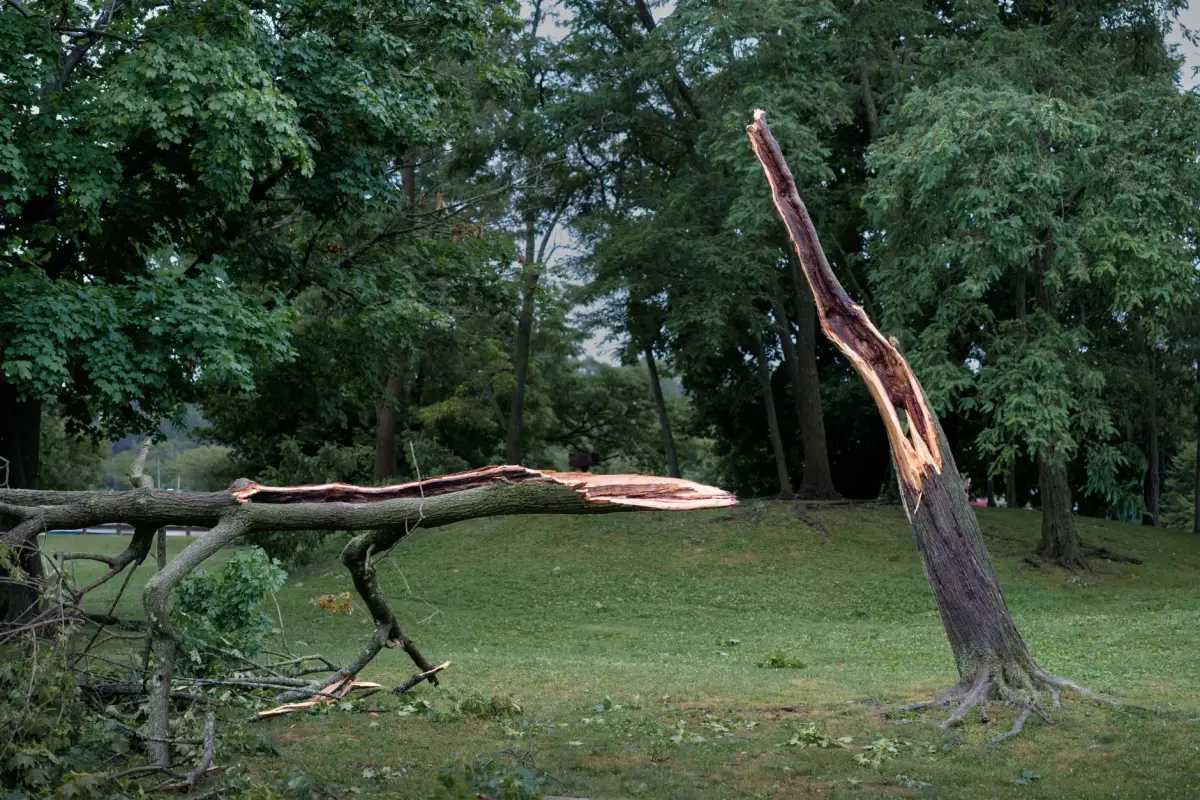
- Torn branch stubs with stripped bark hanging below the break
- A fresh crack in the trunk, or a union that has opened since the storm
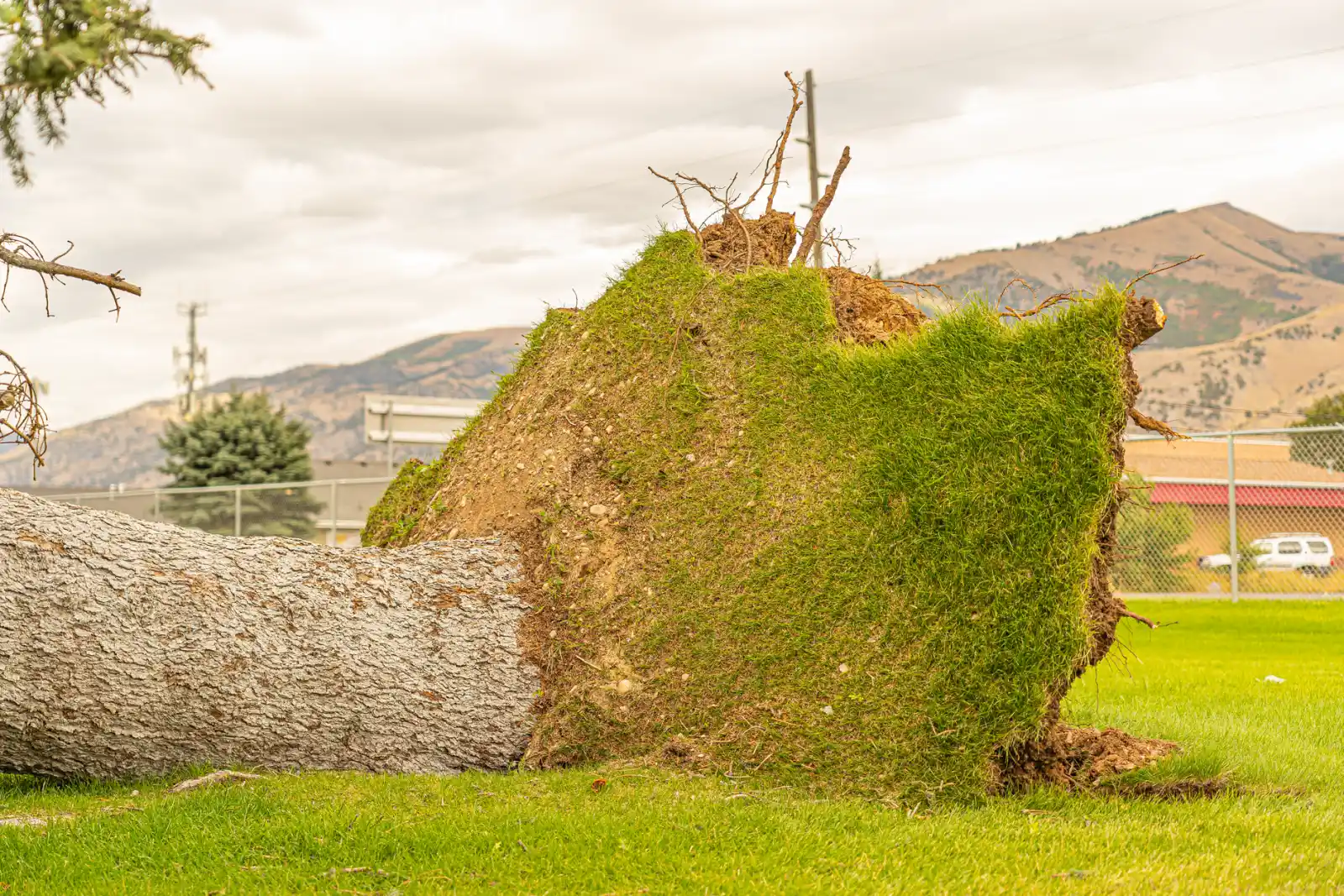
- Soil heaved or lifted on one side of a trunk, meaning the root plate moved
- More than about half the crown gone from a single tree
- A leaning trunk that was vertical before the wind
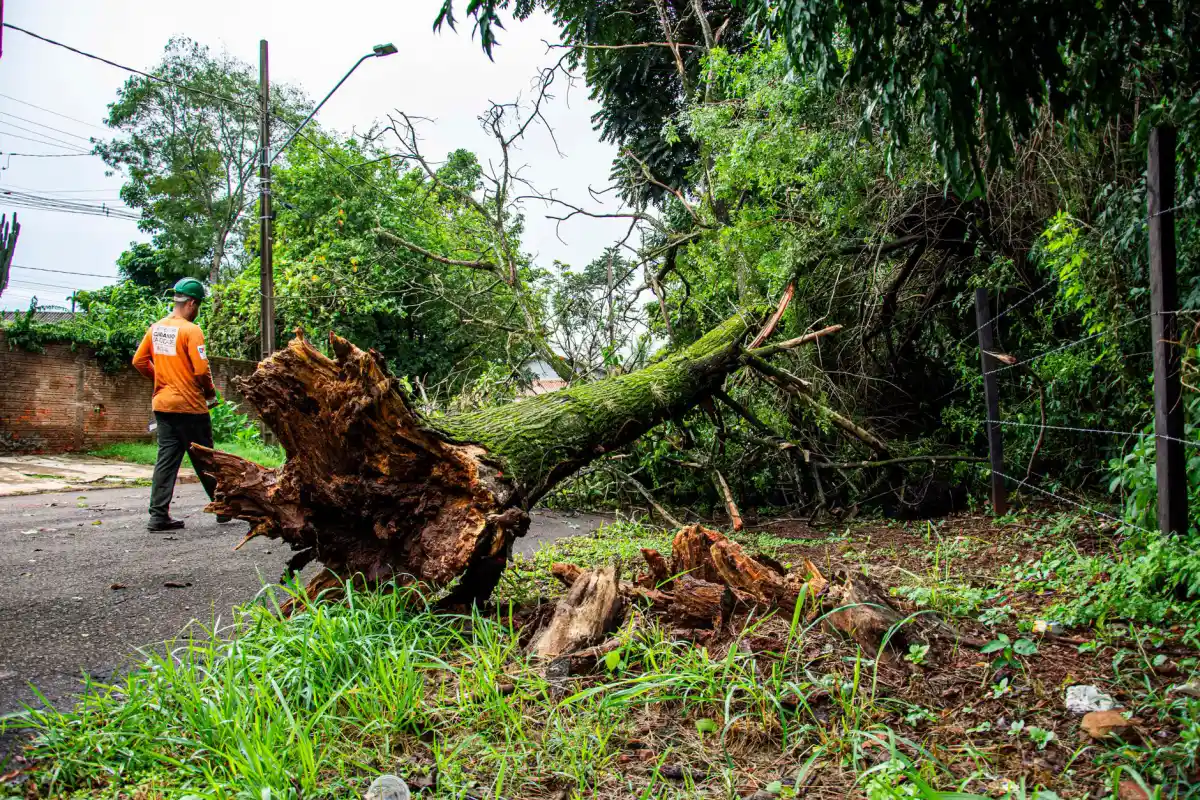
- Trunks on the ground that are still attached to the stump or resting on a fence
How Storm Cleanup Actually Goes
- 1
Walking the property and triaging what's left
Storm cleanup starts with a walk, and the important half of it is done looking up. Hangers are what hurt people days after the weather cleared, and they are easy to miss from a driveway. The walk covers every large tree from more than one angle, then works down to what is on the ground and what is under tension. At the same time each damaged tree gets a verdict: keep, prune, or remove. Crown loss beyond roughly half, a split trunk, or a lifted root plate generally means the tree is finished. One clean limb failure on an otherwise intact tree usually means it recovers. Getting that assessment before the quote is what stops a storm from costing you trees that would have been fine.
- 2
Releasing tension before clearing volume
Everything that is holding load gets dealt with before the general cleanup starts, because the general cleanup puts people underneath it. That means hangers first, brought down from above rather than pulled from below. Then trunks under tension — anything still hinged to its stump, wedged against a fence, or resting on another tree. Those have compression on one side and tension on the other, and cutting the wrong side first is what causes a trunk to snap around. The cuts get planned so the load releases in stages. Only once nothing overhead is loose and nothing on the ground is sprung does the bulk work begin.
- 3
Bucking, chipping, and hauling the volume
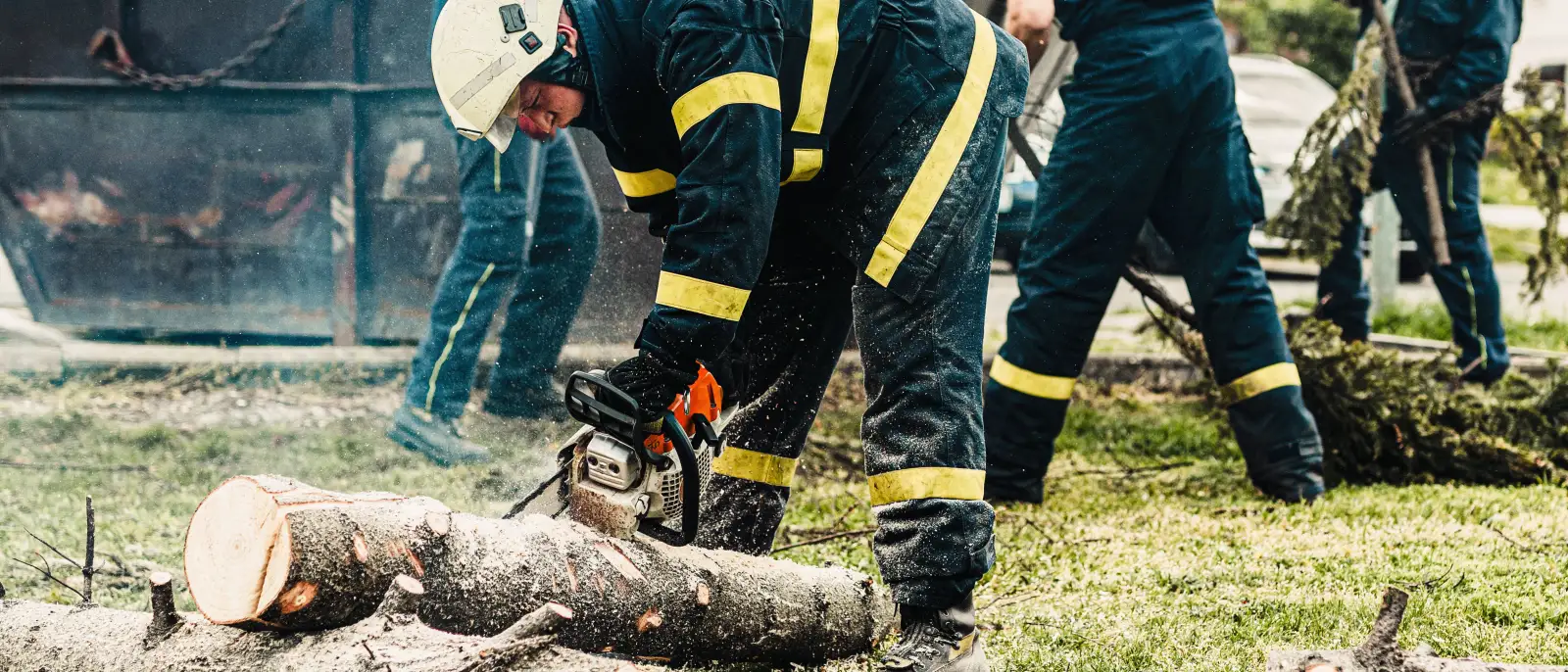
The main body of the work is volume handling. Downed trunks are cut into lengths — long if the wood is being stacked for firewood, shorter if it is being carried any distance. Brush is fed to the chipper continuously rather than piled and handled twice, which is most of the difference between an efficient crew and a slow one. Where the truck can get close, this goes quickly; where material has to be carried out of a ravine lot or around a house, it does not, and that is the single biggest driver of the price. Ash gets separated, because Olmsted County is under state and federal quarantine for emerald ash borer and ash wood cannot go just anywhere.
- 4
Pruning the survivors and the final pass
The trees that stayed up get finished properly. Every torn limb gets cut back to the branch collar so the tree can compartmentalize the wound instead of leaving a ragged stub that will not seal. Broken tops get reduced to appropriate laterals rather than topped flat, because a storm is not a reason to abandon the standard. If it is an oak and it is between April and July, the DNR's rule applies — necessary cuts get sealed immediately with wound paint, because sap beetles are active and fresh wounds are how oak wilt gets in. The last pass is raking, blowing, checking gutters and roofs for thrown material, and walking the lawn once more.
What Does Storm Damage Cleanup Cost in Rochester, MN?
- Volume of material, which is what most storm cleanups are actually priced on
- Access — how close the chip truck gets, and how far anything has to be carried
- How many trunks are under tension and need staged release rather than simple bucking
- Number of hangers and how high they are in the canopy
- Whether damaged survivors need pruning back to proper cuts, and how many
- Whether trunk wood is stacked on site for you or hauled off
- Ash content, which is restricted on where it can be taken under the county quarantine
- How soon after the event you call, since demand spikes hard for a week or two
Storm cleanup is priced on volume and access far more than on difficulty, which means there is a real lever available: if you are willing to handle part of the brush yourself, the Olmsted County Compost Site takes resident yard waste free during daylight hours seven days a week. Say up front what you want stacked versus hauled. The other cost worth naming is the one that shows up later — a torn limb left as a stub becomes a decay column, and that becomes a removal in a decade.
What to Look for in a Rochester Storm Cleanup Company
The property gets walked looking up
Hangers are what hurt people a week after the storm. Clearing the ground and never checking the canopy is the most common way a cleanup gets called finished early.
Triage before removals get quoted
A tree that lost one limb cleanly usually recovers. Storms cost people trees that were never actually finished.
Torn limbs cut back properly, not just tidied
A ragged stub never seals. Cutting the break back to the branch collar is the difference between a tree that closes the wound and one that starts rotting.
No topping in the name of cleanup
A wind-damaged tree that gets topped to even it up ends up with weak regrowth on decaying stubs. Reduction to proper laterals, or leave it to fill in.
Ash kept inside the quarantine rules
Olmsted County is quarantined for emerald ash borer. Where storm-downed ash is allowed to go is not the same as where everything else goes.
Residential and Commercial Storm Cleanup
Residential
Residential storm cleanup is usually a full-property job after a wind event: a downed tree or two, brush everywhere, hangers in the big trees, and several survivors with torn limbs that need proper cuts. Priced on volume and access after a walk of the property.
Commercial
On commercial property the priority is reopening access and clearing anything over walkways a business is liable for, usually on a compressed timeline. That work is covered on the commercial emergency and storm page.
When You Don't Need a Crew
- Something is actively hanging over a doorway or a tree is on your house right now. That's an emergency, not cleanup — deal with the hazard first and let the tidying wait.
- You have a modest pile of branches and a free weekend. The Olmsted County Compost Site at 305 Energy Parkway NE takes resident yard waste free, seven days a week during daylight hours. That's a trailer and an afternoon.
- The tree came down across the primary power lines along the street. That's the utility's work and it costs you nothing.
- Someone is at your door offering storm cleanup for cash, right now, having just happened to be in the neighbourhood. Get a written quote from someone you called instead.
- There's a trunk on the ground still hinged to its stump and you were planning to cut it up yourself. That's the situation that injures homeowners more than any other — it's holding tension and it will move.
Frequently Asked Questions
- What's the difference between storm cleanup and emergency tree service?
- Emergency service is for a hazard that is live right now — a tree on the house, a limb hanging over a doorway, a trunk under tension, blocked access. Storm cleanup is the aftermath once nothing is imminently dangerous: the downed wood, the brush, the hangers, and the pruning on damaged survivors. Emergency work is unscheduled and priced accordingly; cleanup is scheduled work and should be quoted as such.
- Can a storm-damaged tree be saved?
- Often, yes. A tree that lost one large limb cleanly, kept most of its crown, and has no trunk damage generally recovers, especially once the tears are pruned back to proper cuts. A tree that has lost more than roughly half its crown, split down the trunk, or lifted its root plate is usually finished. The honest answer is that this needs someone looking at the specific tree, because the middle cases genuinely go either way.
- How do I find hanging branches after a storm?
- Walk the property and look straight up, from more than one angle on each large tree, and use binoculars on the tall ones. Hangers sit in the canopy held only by friction and they are hard to see from a driveway. Check over walkways, driveways, doorways and play areas first. Do not try to pull one down from underneath — that puts you exactly where it lands.
- Does homeowners insurance cover storm tree cleanup?
- Generally it covers removal when the tree has damaged a covered structure, and generally it does not when trees simply came down in the yard without hitting anything. Some policies include a limited debris removal allowance either way. Photograph everything before it is moved and check your own policy rather than assuming, because the variation between insurers on this is substantial.
- Where can I take storm debris in Rochester?
- The Olmsted County Compost Site at 305 Energy Parkway NE takes resident yard waste free of charge, seven days a week during daylight hours. That is a genuinely useful option after a storm, since cleanup is priced largely on volume — handling some of the brush yourself can bring the cost down. Ash is the exception worth asking about, because the county is under emerald ash borer quarantine and ash wood movement is restricted.
- Should I be worried about the tree that looks fine?
- Look at the base and the unions rather than the crown. Soil heaved or cracked on one side of the trunk means the root plate moved, and a tree that has shifted at the roots does not settle back. A fresh vertical crack, or a union between two stems that has opened since the storm, is the other one worth taking seriously. Both can be present on a tree that still looks entirely normal from the street.
Learn More
- Olmsted County — Compost Site & Yard Waste Drop-Off — free resident yard waste drop-off at 305 Energy Parkway NE, seven days a week during daylight hours
- Minnesota DNR — Tree Care — state guidance on caring for damaged trees and deciding what's worth keeping
- Minnesota Department of Agriculture — Emerald Ash Borer Quarantine — where storm-downed ash wood can legally be taken from a quarantined county
Need Storm Damage Tree Cleanup in Rochester, MN?
Describe what’s going on and get an on-site estimate — no charge for the visit, and no obligation to book the work.
Get My Free Estimate