Tree Care Services in Rochester, MN — Tree Health & Maintenance
Assessing what a tree is actually doing, then pruning and maintaining it on a cycle. Straight answers about which trees are worth keeping and which are not.
Rochester Elite Treecare is your local resource for tree care and maintenance throughout Rochester, Olmsted County and Southeast Minnesota. We work with qualified local arborists who assess trees on site, prune them to standard, and say plainly when a tree is past saving.
Most tree care in this area is maintenance pruning on a cycle plus knowing what to watch for, and the two things worth watching for here are specific. Oak wilt is the defining local problem — Southeast Minnesota is in the heart of the state's oak wilt range and the canopy here is heavily oak. Emerald ash borer is the other: it was confirmed in Olmsted County in 2014 near the I-90 and Highway 63 interchange, found in Rochester the following year, and the county has been under state and federal quarantine since.
One thing to be clear about up front, because plenty of sites are not. This page covers visual assessment and the physical work — pruning, deadwooding, structural work, and removal when that is the answer. It does not cover laboratory diagnosis, chemical treatment, or trunk injection. If your tree needs a confirmed disease diagnosis or a treatment programme, that is a different specialist, and you should be told so rather than sold pruning as a substitute.
Tree Health & Maintenance Services in Rochester, MN
Tree Health Assessments
A visual assessment is a structured look at what a tree is doing and what it is likely to do next. It works from the base up: root flare and soil for heaving, decay and fungal fruiting bodies; the trunk for cracks, cavities, seams and old wounds; the unions for included bark; and the crown for deadwood, dieback pattern and this year's growth compared with last year's. Where symptoms appear matters more than that they appear — a whole section dying at once suggests something vascular or below ground, while scattered deadwood usually just means age and shade. This is visual assessment, not laboratory diagnosis, and the honest version says which one you are getting.
Preventative Tree Maintenance
Maintenance on a cycle costs a fraction of what deferred maintenance costs, and the reason is mechanical rather than moral. A defect corrected on a young tree is one small cut. The same defect on a forty-year-old silver maple is a rigging job, or a removal after it splits. A reasonable cycle is every two to three years on young trees while structure is still being set, and every three to five on mature trees for deadwood and clearance. The other half of prevention is timing: in this region, oak work belongs in the dormant season, which means planning it rather than reacting to it.
Dead & Diseased Branch Removal
On a maintenance visit, deadwood removal is as much diagnostic as it is safety work. Dead wood does not flex, so it fails without warning and on a still day, which is why limbs over drives, patios and walkways come out first. But the pattern of dieback is information: a single dead limb is routine, a whole quadrant dying at once is not, and upper-crown browning on an oak in summer is the classic oak wilt signature and deserves attention immediately. Because these are oaks, the DNR's April-through-July restriction applies here too — non-urgent oak deadwooding gets scheduled for winter.
Structural Tree Pruning
Structural pruning decides what a tree will look like in thirty years, and it is by a wide margin the highest-value work available on a young tree. The main objective is establishing a single dominant leader and removing competing stems before they become co-dominant trunks with bark trapped between them. That defect — included bark at a tight union — is precisely what splits mature silver maples in half in a wind event, and it is nearly free to prevent and expensive to live with. On mature trees, structural work is narrower: reducing end weight on overextended limbs and correcting damage from previous bad pruning, particularly old topping cuts.
Storm Risk Reduction Pruning
Reduction pruning ahead of the weather is the practical version of tree risk management, and Southeast Minnesota's straight-line wind events are the reason it is worth doing. The work is targeted: shortening overextended limbs back to laterals large enough to take over, reducing end weight where all the mass has migrated to the branch tips, and taking out deadwood that will come down anyway. What it must not become is topping or lion-tailing. Stripping a crown's interior and leaving weight on the ends makes limb failure more likely, not less, and topping produces weakly attached regrowth on decaying stubs.
What's Included in a Tree Care Visit
- A visual assessment from root flare to crown, with findings explained in plain terms
- Deadwood removal, prioritised over drives, walkways and patios
- Structural pruning to establish or maintain a dominant leader
- Reduction of overextended limbs back to appropriate laterals
- Crown cleaning of crossing, rubbing and rubbing-damaged branches
- Oak work scheduled around the DNR's April-through-July window
- A clear recommendation when the answer is removal rather than care
- A referral onward when what's needed is diagnosis or treatment, not pruning
Signs a Tree Is in Trouble
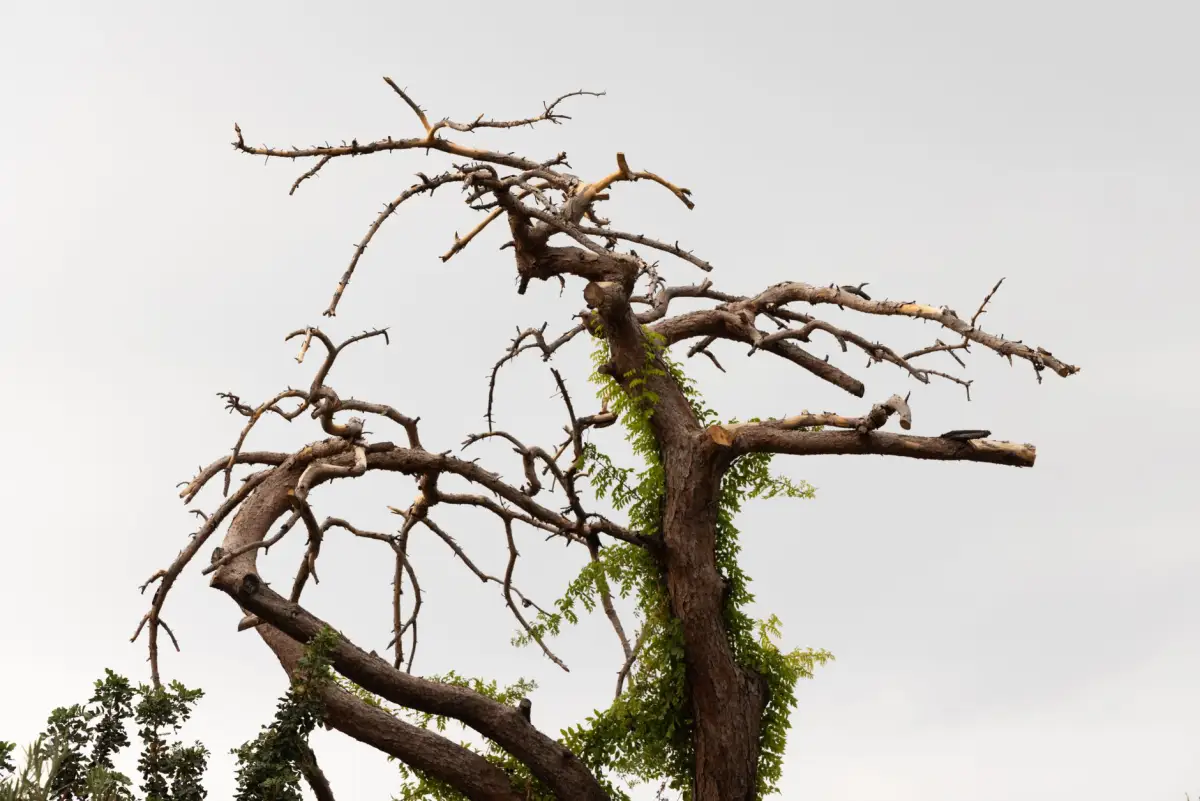
- Upper crown browning or wilting on an oak during summer while lower branches stay green
- Bark flaking off an ash in sheets, with S-shaped tunnels in the wood beneath
- Thinning canopy or noticeably shorter annual growth compared with previous years
- A whole section of the crown dying at once rather than scattered deadwood
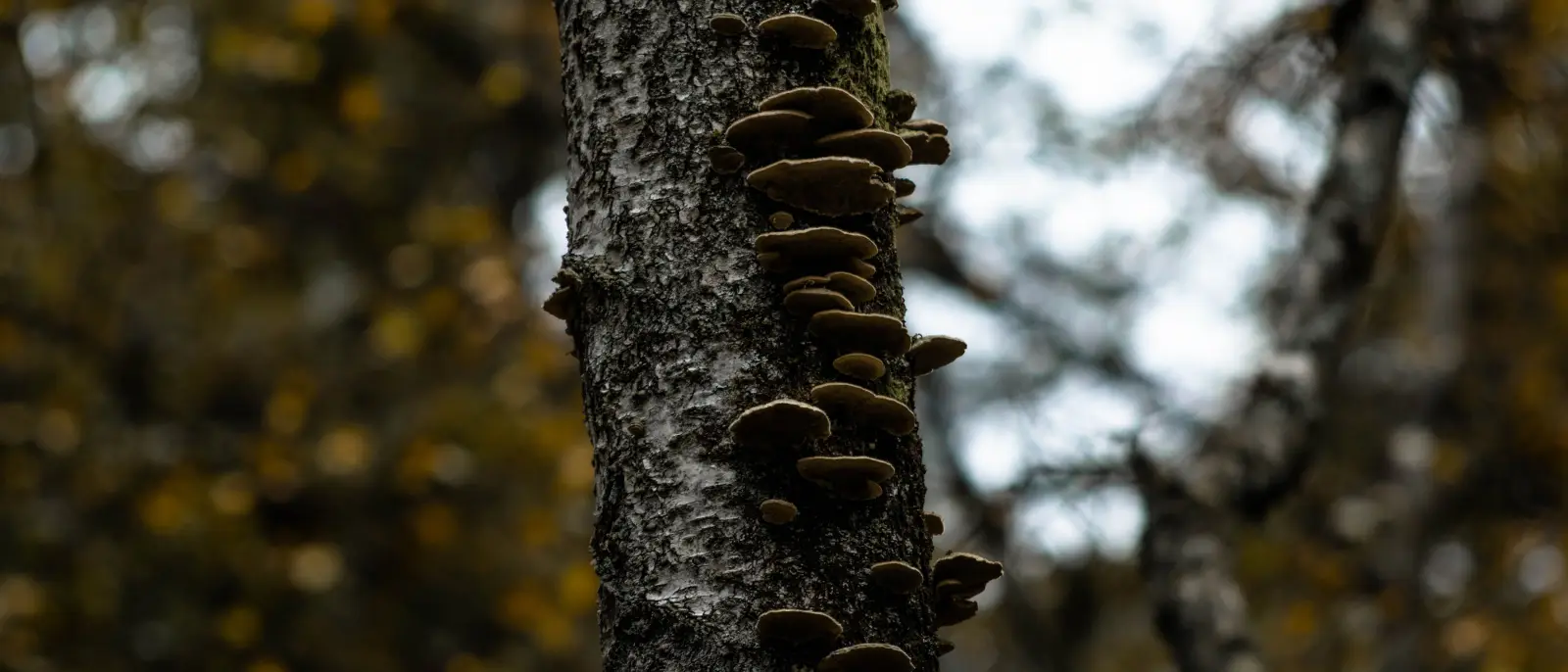
- Shelf fungus or mushrooms at the base, on the root flare, or on the trunk
- Two trunks meeting in a tight V with bark pinched between them
- Suckering low on the trunk or from the root flare, which often signals stress
- Soil heaved or cracked on one side of the base
How a Tree Care Visit Actually Goes
- 1
Assessing the tree from the ground up
The assessment runs base to crown, in that order, because the most consequential problems live at the bottom. Root flare first: heaved or cracked soil, girdling roots, decay, and fungal fruiting bodies, which indicate decay that is already well advanced by the time it is visible. Then the trunk for cracks, seams, cavities and old wounds, and every major union for included bark. Then the crown for deadwood, the pattern of any dieback, and this season's shoot extension against previous years, which is the simplest available measure of whether a tree is gaining or losing ground. What comes out of it is a plain-language verdict: fine, maintain, watch, or remove.
- 2
Knowing what's local and what it means
Two problems dominate here and both are worth recognising early. Oak wilt shows as upper-crown browning and leaf drop during summer, moving down the tree, and it spreads two ways: sap beetles carrying spores to fresh cuts above ground, and root grafts below ground. Red oaks growing near each other fuse roots underground, and the fungus moves tree to tree through those connections — which is why one infected oak can become a problem for the row. Emerald ash borer, confirmed in Olmsted County since 2014, shows as thinning from the top, bark flaking, woodpecker damage, and S-shaped galleries under the bark. Recognising these is visual work; confirming and treating them is a different specialist's job.
- 3
Doing the pruning to standard, at the right time
The physical work follows the assessment and follows ANSI A300, which exists so pruning is a repeatable practice rather than a matter of taste. Cuts are made just outside the branch collar so the tree can compartmentalize the wound; no flush cuts, which remove the collar and leave a wound the tree cannot close. Live crown removal stays within roughly a quarter in one season on a healthy mature tree, and less on a stressed or older one. Spikes go on removals only, never on a tree that is staying. Timing is the local constraint: oaks get scheduled outside the April-through-July window, and if a hazard cut genuinely cannot wait, it gets sealed immediately per DNR guidance.
- 4
Setting the cycle, or making the removal call
The visit ends with a plan rather than an invoice. For a healthy tree, that means a maintenance interval — two to three years on young trees while structure is being set, three to five on mature trees for deadwood and clearance — and a note of what to watch. For a declining tree, it means an honest position on whether care is buying real time or deferring an inevitable removal at increasing cost, because a dead tree costs more to take down than a live one and dead ash go brittle quickly. Where the answer is diagnosis or chemical treatment rather than pruning, the right outcome is a referral, not a sale.
What Do Tree Care Services Cost in Rochester, MN?
- Number and size of trees, and how much of the work is at height
- Whether a lift can reach them or the work has to be climbed on rope
- How long since the last pruning — a neglected tree takes far more cuts than a maintained one
- The objective: deadwooding, structural work and reduction are different jobs
- Species and wood characteristics, which change how limbs are rigged and lowered
- Season, and for oaks whether the work has to wait for the dormant window
- Whether an assessment is standalone or part of a visit that includes the work
- Access, which on the bluff and ravine lots around the Zumbro valley can dominate everything else
Maintenance pricing rewards being early in a way that is easy to underrate. Correcting a competing leader on a young tree is one cut from the ground. The same defect at forty years is a rigging job, and after it splits it is a removal. The other cost worth being clear about: a dead tree is more expensive to remove than a live one, because brittle wood cannot be safely climbed, so postponing a removal that is genuinely necessary usually raises the eventual bill rather than lowering it.
What to Look for in a Rochester Tree Care Company
Visual assessment, described as visual assessment
Looking at a tree tells you a great deal. It is not laboratory diagnosis, and anyone conflating the two is overselling what they did.
No treatment sold that isn't offered
Injections, chemical treatment and confirmed disease diagnosis are a different specialist's work. The right answer there is a referral.
Pruned to ANSI A300
Cuts outside the branch collar, no flush cuts, no topping, no lion-tailing, and a real ceiling on how much live crown comes off in one season.
Oak work planned around the DNR window
April through July is when sap beetles move oak wilt into fresh cuts. Non-urgent oak work belongs in the dormant season, which means scheduling it.
A removal recommendation when that's the truth
Some trees are past the point where care buys real time. Saying so costs a maintenance contract and is the reason to trust the rest of it.
Residential and Commercial Tree Care
Residential
Residential tree care is usually a maintenance cycle on a handful of trees: deadwood, clearance, structural work on the young ones, and an eye on the oaks and ash. Assessments happen on site, and oak work gets planned into the dormant season.
Commercial
On commercial and managed property, tree care runs to a maintenance schedule across many trees with liability and access driving the priorities. That work is covered on the commercial tree trimming and HOA tree services pages.
When Tree Care Isn't the Answer
- You need a confirmed disease diagnosis or a chemical treatment programme. That's laboratory work and a treatment specialist, not pruning. University of Minnesota Extension is the right starting point.
- The tree is already structurally failed — split union, significant basal decay, root plate moving. Pruning doesn't reverse structural failure, and treating it as a care problem just delays a removal that gets more expensive.
- It's an oak, it's healthy, and it's June. Nothing needs doing right now. Wait for the dormant season rather than paying someone to cut it during the highest-risk window of the year.
- You want a mature tree made substantially smaller. Reduction has real limits, and past them the honest answer is that the tree is in the wrong place — not that it needs more pruning.
- It's a young tree you could shape yourself with hand pruners. Structural pruning on a sapling is genuinely a homeowner job, and Extension publishes good guidance on it.
Frequently Asked Questions
- What are the signs of oak wilt in Rochester, MN?
- The classic signature is upper-crown browning and rapid leaf drop during summer, progressing downward, on a tree that looked healthy in spring. Red oaks can die within weeks; white oaks decline more slowly. It spreads two ways — sap beetles carrying spores to fresh wounds, and root grafts between nearby oaks underground. That second route is why one infected oak can threaten the ones next to it, and why confirming a suspected case matters quickly.
- Is emerald ash borer in Olmsted County?
- Yes. It was confirmed in Olmsted County in 2014 near the interchange of Interstate 90 and Highway 63, and found within Rochester the following year. The county is under state and federal quarantine, which restricts moving ash material and hardwood firewood. At the time EAB reached Rochester, ash made up about 15 percent of the city's roughly 100,000 public trees, including around 8,000 on boulevards.
- Do you offer tree injections or disease treatment?
- No. This covers visual assessment and the physical work — pruning, deadwooding, structural work, and removal where that is the answer. Trunk injection, chemical treatment and laboratory disease confirmation are a different specialist's field, and being pointed there is a better outcome than being sold pruning as a substitute for treatment. University of Minnesota Extension is a good starting point for diagnosis.
- How often should mature trees be inspected?
- Every three to five years is a reasonable interval for a mature tree in good condition, alongside a look after any significant wind event. Young trees benefit from more frequent attention — every two to three years while structure is still being set — because that is when correcting a competing leader costs one cut instead of a rigging job. Trees near a house, a driveway or a play area justify the shorter end of any interval.
- Can a tree with oak wilt be saved?
- For an infected red oak, usually not — they decline fast, and the practical questions become removal and whether the root grafts to neighbouring oaks need severing to stop it spreading. White oaks fare better and sometimes survive. What determines the answer is species and how far it has progressed, which needs eyes on the specific tree and, for confirmation, proper diagnosis rather than a visual guess.
- What's the best time of year for tree maintenance in Rochester?
- Late dormant season for most work. Structure is visible without leaves, the ground is firm, and the tree is not carrying summer stress. For oaks, it is not just preferable but important — DNR guidance is to avoid pruning or cutting oaks April through July, when sap beetles are active and carry oak wilt to fresh cuts. Genuinely hazardous work is the exception, and those cuts get sealed immediately.
Learn More
- University of Minnesota Extension — Oak Wilt in Minnesota — identification, how the disease spreads through beetles and root grafts, and management options
- University of Minnesota Extension — Emerald Ash Borer — what EAB damage looks like and how to decide whether an ash is worth keeping
- Minnesota DNR — Oak Wilt Management — the April-through-July no-cut window and how root graft severing is used to stop spread
Need Tree Care Services in Rochester, MN?
Describe what’s going on and get an on-site estimate — no charge for the visit, and no obligation to book the work.
Get My Free Estimate