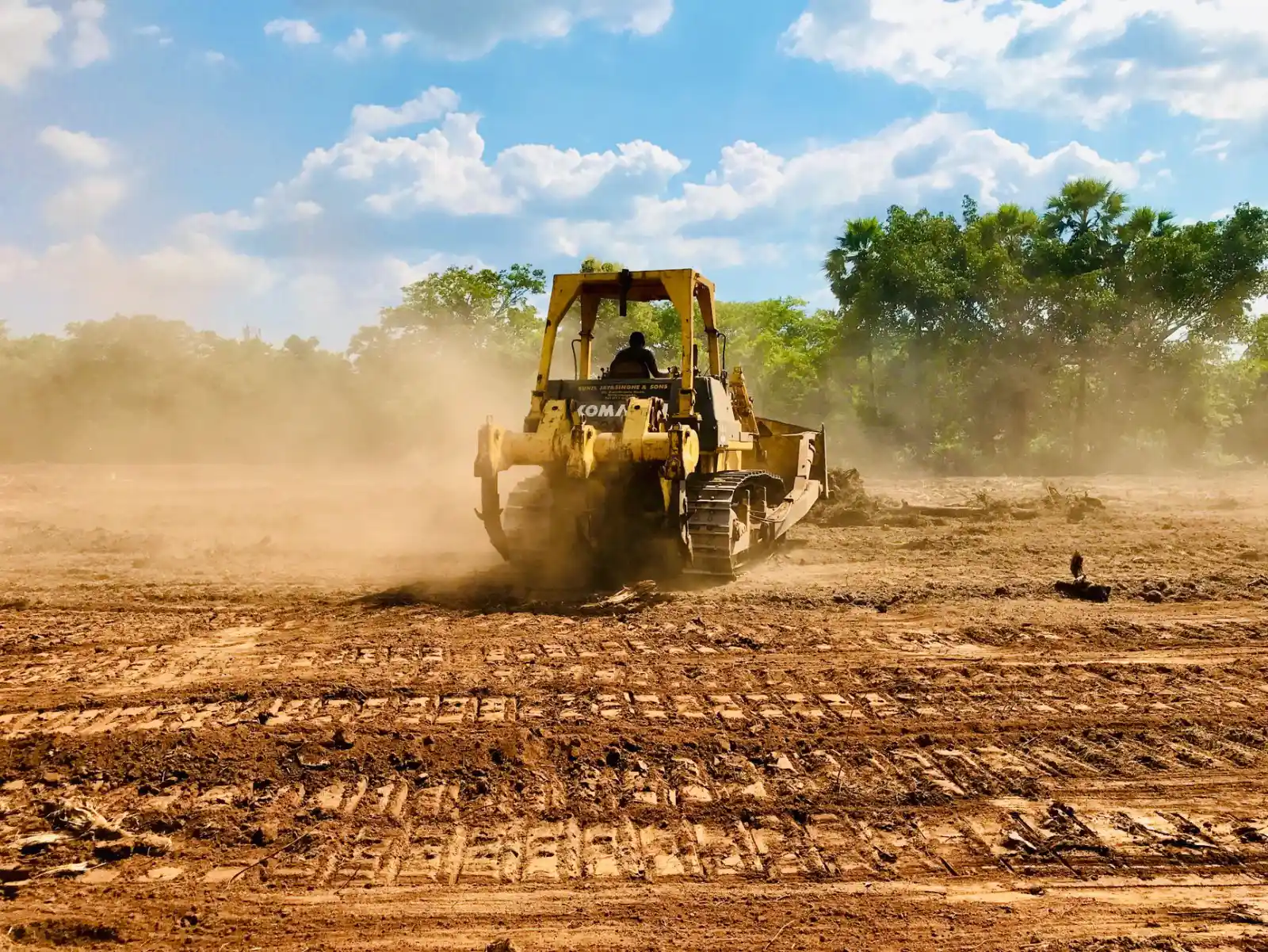
Commercial Land Clearing in Rochester, MN — Site & Development Clearing
Parcels cleared to surveyed limits, on a construction schedule, with erosion control in place and the permitting question answered before anything moves.
Rochester Elite Treecare is your local resource for commercial land and lot clearing across Rochester, Olmsted County and Southeast Minnesota. We work with experienced local tree service specialists who clear development parcels and construction sites to defined limits and to someone else's schedule.
Commercial clearing is the same physical work as residential clearing under harder constraints: surveyed limits instead of flagged approximations, a construction schedule that other trades are stacked behind, erosion control that has to be in and functioning, and a permitting position that is checked rather than assumed. Getting any of those wrong is expensive in a way that a backyard job never is.
The threshold that matters most is one acre. MPCA requires NPDES/SDS construction stormwater permit coverage for any land disturbance of one acre or more, and also for smaller disturbance that is part of a common plan of development or sale exceeding an acre. That coverage requires a stormwater pollution prevention plan describing how runoff and sediment get controlled. Most commercial parcels clear that threshold comfortably, which means the plan exists before the first machine arrives, not after.
Commercial Land & Lot Clearing in Rochester, MN
Commercial Site Clearing
Site clearing on a commercial parcel works to surveyed limits, not to a walked boundary, because everything downstream of it — building envelope, parking, utilities, drainage — is set against those lines. Clearing past them costs money in replanting requirements and, on some sites, in permit consequences. Clearing short of them means a machine comes back mid-build, which is worse. The other defining feature is sequencing: erosion control in first, clearing second, and stripping and grading behind that, with the site left stable at every stage rather than only at the end.
Construction Site Tree Clearing
Clearing ahead of construction is the part of the job that sets up everything after it, and the most common expensive mistake is what happens to the trees that stay. A tree left standing while equipment drives repeatedly across its root zone gets its soil compacted and typically dies two or three years later, once the landscaping is in and the warranty period is over. Protecting keepers means fencing or matting the root zone before traffic starts, not asking operators to be careful. Stumps and root systems come out wherever footings, slabs, pavement or drainage will run, since a buried stump decays and the ground above it settles.
Tree & Brush Clearing
At commercial scale, trees and brush are handled as separate streams because they cost differently to process. Merchantable trunks come down deliberately, get cut to length and either loaded out or stacked for disposal. Undergrowth, limbs and saplings get processed continuously as they come out, since handling material twice is where clearing budgets go. Where ground and access allow, mechanised clearing covers far more per day than hand work; on slope ground — common on the wooded valley parcels around Rochester — it reverts to cutting and carrying. Ash is separated throughout under Olmsted County's emerald ash borer quarantine.
Development Lot Clearing
Clearing for development carries requirements that survive the clearing itself, which is why they belong in the plan early. Rochester's Unified Development Code requires boulevard trees as a condition of developing private property, at 35-foot spacing on commercial-zoned property and 50-foot spacing on residential-zoned property. That means the finished site has a planting obligation regardless of how bare the parcel gets, and it is considerably cheaper to know that at clearing than to discover it at inspection. Landscape and buffer requirements, tree preservation provisions and stormwater treatment all interact with what comes down and what stays.
Large-Scale Vegetation & Tree Removal
Volume changes the economics rather than the technique. At scale, the questions are how much material leaves the site, how it leaves, and what it costs per load — because hauling everything off a large parcel is often the single biggest line on the job. Chipping and spreading on site avoids most of that where the finished use permits it. Grinding stumps in place is usually cheaper than excavating and hauling them, but only where nothing structural is going over the top. These are decisions with real money attached, and they get made against the site plan rather than by default.
What's Included in a Commercial Clearing Job
- Clearing to surveyed limits rather than a walked or flagged approximation
- Utility locates before any soil is disturbed
- Erosion and sediment control installed before clearing starts
- Preservation trees fenced or matted at the root zone before traffic begins
- Trees felled, processed, and loaded out or stacked as agreed
- Stumps and root systems removed where footings, pavement or drainage will run
- Ash separated and handled within the county's emerald ash borer quarantine
- Site left stable at each stage and finished to the agreed condition
When a Commercial Parcel Needs Clearing
- A development or building parcel that needs to be taken to workable ground
- A construction schedule with clearing on the critical path ahead of other trades
- An expansion — parking, building footprint, access road — into currently wooded ground
- Overgrown ground on an owned parcel that is being brought back into use
- Widespread dead and dying ash across a commercial or institutional property
- An easement or access route grown in to the point that equipment can't reach
- A parcel being prepared for sale or subdivision
How Commercial Land Clearing Actually Goes
- 1
Scope, survey limits and the site plan
The job starts against drawings rather than a description. Clearing limits come off the survey, the preservation trees come off the site plan, and both get physically marked on the ground before anything arrives. The walk then covers what the drawings do not show: terrain and slope, wet ground and drainage, where equipment can travel and stage, access for material leaving the site, and what is buried in an unmanaged parcel — old fencing, foundations, wells, dumped debris. Access and haul routes usually shape the whole approach more than the acreage does, particularly on the wooded valley parcels around Rochester where slope rules out wheeled equipment entirely on parts of a site.
- 2
Permits, stormwater and erosion control
The permitting position gets confirmed before mobilisation, because discovering it mid-job stops the job. MPCA requires NPDES/SDS construction stormwater permit coverage for land disturbance of one acre or more, or for less than an acre inside a common plan of development or sale exceeding an acre, and that coverage carries a stormwater pollution prevention plan setting out how runoff and sediment are controlled. On top of that sit wetlands, shoreland and buffer requirements, local ordinances, and Rochester's development code — including the boulevard tree planting obligation on developed property. Erosion and sediment control goes in first and stays in until the ground is stabilised.
- 3
Protecting keepers, then clearing in sequence
Preservation trees get their root zones fenced or matted before any traffic starts, because compaction is the mechanism that kills trees on construction sites and it does its damage quietly. The root zone extends well past the visible crown, so protection is drawn generously rather than tight to the trunk. Then clearing runs in order: trees down and processed, brush handled continuously rather than piled twice, trunks separated by what happens to them, and stumps out wherever the site plan puts a footing, slab, pavement or drainage line. Ash is kept separate throughout, since Olmsted County is under state and federal quarantine and ash material cannot be moved freely.
- 4
Material, grading and handover
Where the material goes is a budget decision made at scope, not at the end. Chipped and spread on site is cheapest where the finished use permits it; hauled off is cleanest and, at commercial volume, the largest single line on many clearing jobs. Trunk wood gets loaded or stacked as agreed. The parcel is then left at the condition the contract names — cleared, rough-graded, or stripped and stockpiled — with erosion control still functioning, because pulling it early is what turns a cleared slope into a sediment problem in the next rain. Handover is a walk of the parcel against the surveyed limits and the agreed finished state.
What Does Commercial Land Clearing Cost in Rochester, MN?
- Terrain, which on valley and slope parcels can dominate every other factor
- Density and tree size across the parcel, not just its acreage
- How much material leaves the site versus being chipped and spread
- Whether stumps and root systems come out, and over how much of the parcel
- Access and haul routes for equipment in and material out
- Permitting and the erosion control the site actually requires
- The finished condition: cleared, rough-graded, or stripped and stockpiled
- Schedule pressure, since compressed timelines mean more equipment and crew at once
On a commercial parcel the two decisions with the most money attached are what happens to the material and how much of the parcel needs stumps out. Hauling everything off a large site is frequently the biggest single line, and chipping and spreading avoids most of it wherever the finished use allows. Get the quote broken into clearing, stump removal, material handling and erosion control as separate lines — a lump sum on a parcel nobody has walked is not a number you can hold anyone to.
What to Look for in a Rochester Land Clearing Contractor
Cleared to surveyed limits
Drawings, not flagging tape and a description. Clearing past the limit costs money in replanting; clearing short of it brings a machine back mid-build.
Permitting confirmed before mobilisation
Disturbance of an acre or more needs MPCA construction stormwater coverage and a SWPPP. That gets established up front, because finding out mid-job stops the job.
Root zones protected before traffic starts
Compaction is what kills preservation trees, and it kills them two or three years later when nobody connects it to the clearing. Fencing goes in before the first machine.
Priced as separate lines
Clearing, stump removal, material handling and erosion control are four different costs. A single lump sum hides which one is about to move.
Erosion control that stays until it's stabilised
Pulling it early is what turns a cleared slope into a sediment problem in the next heavy rain, and that becomes the owner's problem, not the contractor's.
Project Types We Cover
Residential
Clearing a house lot, a driveway line or an overgrown residential parcel is covered on the residential land clearing page, where the scale and the permitting position are usually different.
Commercial
This covers development parcels, construction sites, commercial and industrial expansion, institutional grounds, and large overgrown parcels being brought back into use.
When This Isn't the Right Scope
- You need undergrowth cut but the mature trees kept and the soil undisturbed. That's brush clearing — cheaper, faster, and it doesn't trigger the same permitting.
- The parcel includes wetland, shoreland or protected buffer. That has to be resolved with the city, the county and the relevant agency before anyone quotes clearing.
- You want stumps buried on site to save on hauling. It's cheaper on the day and produces settling and failed compaction under whatever gets built over it.
- You're clearing a site with no plan for the boulevard planting requirement. Rochester's development code requires boulevard trees at 35-foot spacing on commercial-zoned property — worth knowing before the parcel is bare.
- There's no survey. Clearing to an approximate line on a commercial parcel is how a project ends up replanting a buffer it removed.
Frequently Asked Questions
- Do we need a stormwater permit for a commercial clearing project?
- Almost certainly, if the disturbance reaches an acre. MPCA requires NPDES/SDS construction stormwater permit coverage for any land disturbance of one acre or more, and also for smaller disturbance that is part of a common plan of development or sale exceeding an acre. Coverage requires a stormwater pollution prevention plan describing how runoff and sediment will be controlled. Most commercial parcels cross that threshold, so the plan should exist before mobilisation.
- How do we keep the trees we want to preserve alive through construction?
- Protect the root zone before traffic starts, and draw the protection generously — the roots extend well past the visible crown. Fencing or matting keeps equipment from compacting the soil, which is the mechanism that kills most construction-site trees. The damage is slow: a compacted tree usually declines and dies two or three years later, well after the project closes out, which is exactly why it gets skipped and exactly why it should not be.
- Do stumps have to come out on a commercial site?
- Wherever anything structural is going over them, yes. Footings, slabs, pavement and drainage all need the stump and major roots removed, because buried wood decays and the ground above it settles — which shows up as failed compaction and pavement cracking a few years in. Areas that will be landscaped or turfed can generally be handled with grinding instead, which is substantially cheaper. That split gets drawn against the site plan.
- Does Rochester require planting after a site is cleared?
- For development, yes — the city's Unified Development Code requires boulevard trees as a condition of developing private property, at 35-foot spacing on commercial-zoned property and 50-foot spacing on residential-zoned property. Landscape, buffer and tree preservation provisions can apply on top of that depending on the project. It is much cheaper to plan a site's clearing against those requirements than to meet them retroactively at inspection.
- What happens to the cleared material?
- Three routes, at three costs. Chipped and spread on site is cheapest and works where the finished use permits it. Trunk wood is cut to length and loaded out or stacked. Hauling everything off is cleanest and at commercial volume is frequently the single largest line on the job. Ash is the constrained one: Olmsted County is under state and federal emerald ash borer quarantine, so ash material has to go somewhere that can legally accept it.
- How is a commercial clearing job priced?
- Not by acreage alone, which is what surprises people most. Terrain is usually the dominant factor, because slope ground that rules out wheeled equipment turns the work into hand cutting and carrying. After that: tree density and size, how much material leaves the site, how much of the parcel needs stumps removed, the finished condition, access and haul routes, and the erosion control the site requires. Ask for those as separate lines rather than one lump sum.
Learn More
- Minnesota Pollution Control Agency — Construction Stormwater — the one-acre threshold, common plan of development rules, and the SWPPP requirement
- City of Rochester — Trees, Lawns & Forestry — city forestry requirements, including boulevard tree obligations on developed property
- Minnesota Department of Agriculture — Emerald Ash Borer Quarantine — restrictions on moving ash material off a site in a quarantined county
Need Commercial Land Clearing in Rochester, MN?
Describe what’s going on and get an on-site estimate — no charge for the visit, and no obligation to book the work.
Get My Free Estimate