Emergency Tree Service in Rochester, MN — Fallen Trees & Hanging Limbs
A tree on the house, a limb hanging over the driveway, a trunk leaning further than it was yesterday. Make-safe first, the full removal after.
Rochester Elite Treecare is your local resource for emergency tree service in Rochester, Olmsted County and Southeast Minnesota. We work with experienced arborists who take after-hours and weekend calls, and who deal with the immediate hazard first rather than trying to finish the whole job in the dark.
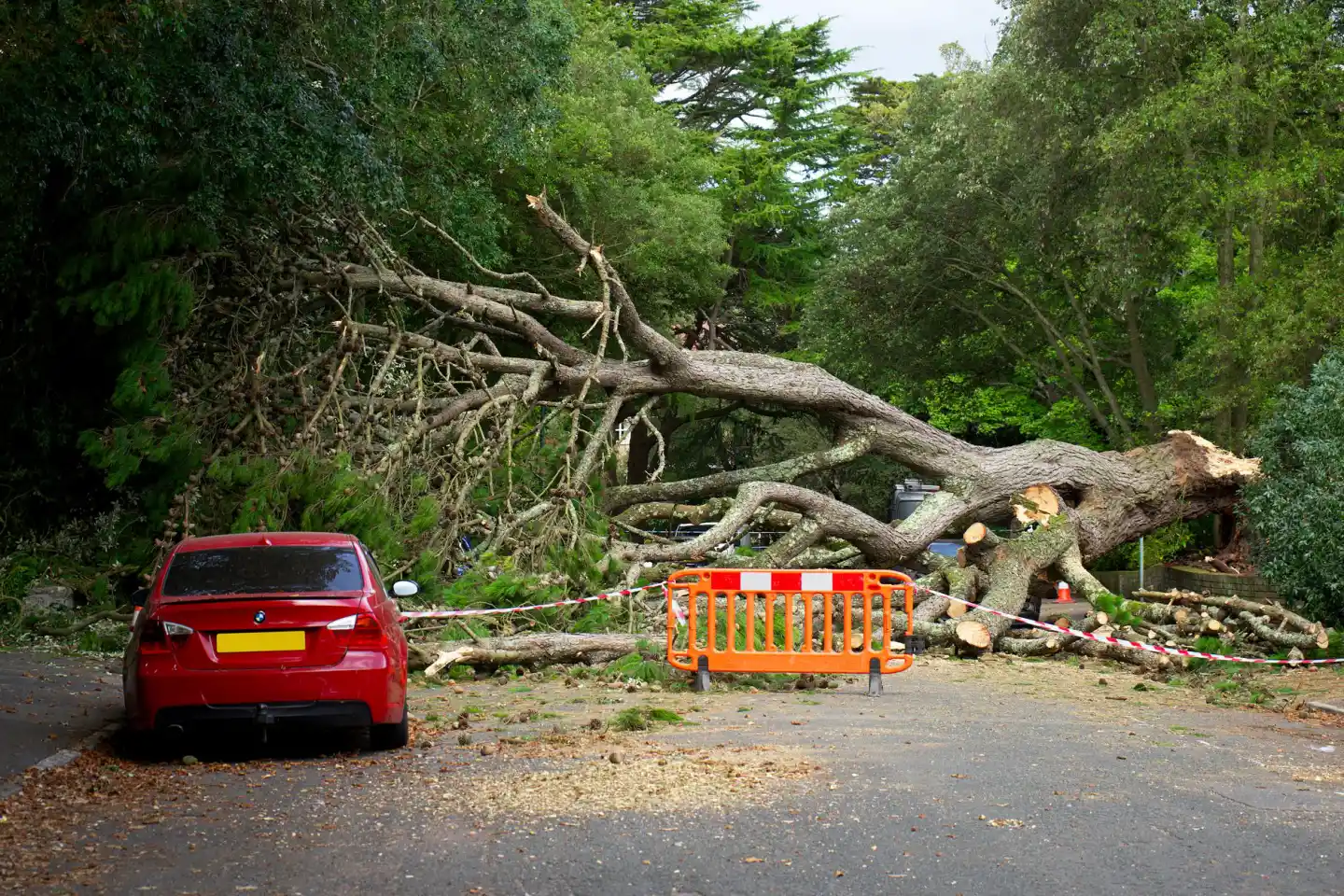
An emergency is a hazard that is live right now. A tree across the driveway with the car behind it. A limb hung up in the canopy over the back door, holding by nothing. A root plate that lifted in the night and a trunk now leaning at the neighbour's roof. What these have in common is that the danger is present before anybody touches anything, which changes how the work is approached and priced.
Emergency work is usually two visits, not one. The first is a make-safe: get the hazard neutralised, the hanger down, the pressure off the structure, the access reopened. The full removal, the wood, and the cleanup follow on a scheduled visit in daylight. That split is deliberate. Cutting a loaded, tensioned tree at 11pm with a headlamp is how people get hurt, and the cleanup is the part that genuinely can wait. If your situation is a yard full of broken branches after the wind has already passed, that is storm cleanup rather than an emergency, and it is covered on its own page.
Emergency Tree Services in Rochester, MN
Emergency Tree Removal
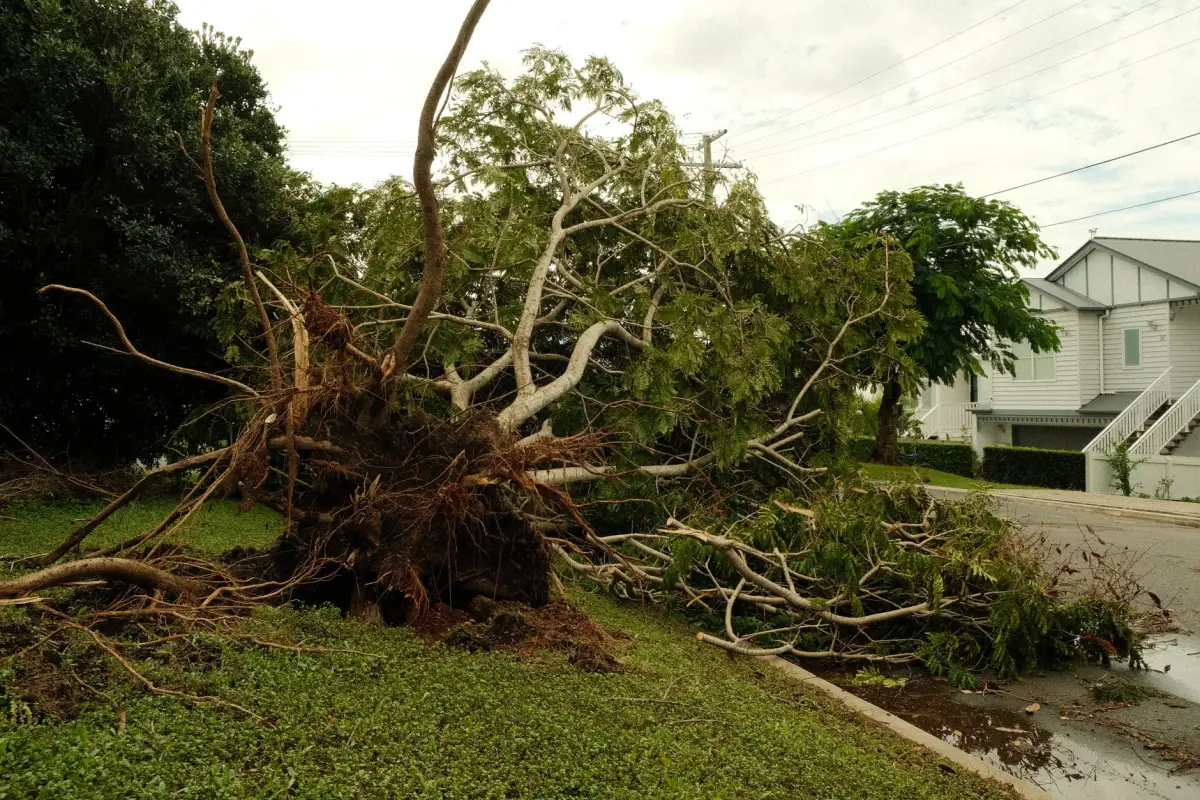
Emergency removal is for a tree that is failing now rather than one that might fail eventually. The markers are specific: a root plate lifted on one side with soil heaved, a fresh crack running vertically up the trunk, a split at a co-dominant union that has opened, or a lean that changed after a storm. Silver maples are the recurring Rochester version, because two trunks with included bark that have held for forty years let go all at once. These trees are approached differently from a planned removal — nothing is climbed until the failure is understood, and the tree is usually taken apart with the load released in a controlled order rather than felled.
Fallen Tree Removal
A tree already on the ground is not automatically safe. A trunk that has fallen but is still hinged to its stump, or resting on a fence, a shed or another tree, is holding enormous stored tension, and the first cut into it decides which way it moves. That is what spring poles and barber-chairing describe, and it is the situation that hurts homeowners with their own chainsaws more than any other. The job is to read where the compression and tension are before any cut, release the load in the right order, and only then start bucking the trunk into manageable lengths.
Dangerous & Hanging Limb Removal
A hanger is a broken limb still up in the canopy, caught on other branches, with nothing holding it but friction. It is the most common emergency call after a windstorm and the most consistently underestimated, because from the ground it looks stable. It is not — it comes down when the wind picks up or the branch it is resting on flexes, and there is no warning. Hangers over a driveway, a walkway, a play area or a doorway get dealt with first. The limb usually has to be reached and roped rather than pulled from the ground, because pulling on a hanger is how it comes down on the person pulling.
Trees Fallen on Homes & Structures
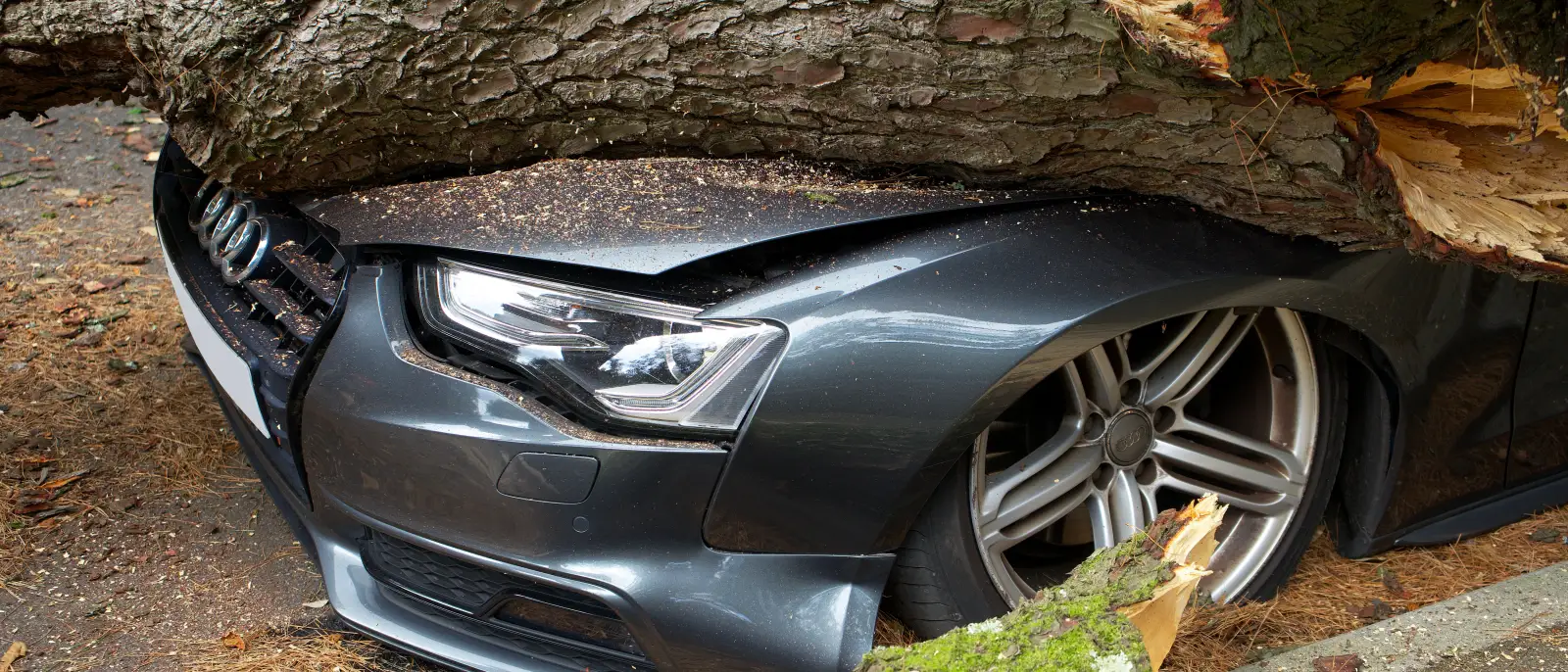
A tree on a roof is a sequencing problem before it is a cutting problem. The weight is doing something to the structure, and cutting in the wrong order lets the load shift and does more damage on the way off than the fall did. So the work is staged: relieve weight from the far end, rig sections off rather than dropping them, and keep the load controlled the whole way down. Before anything moves, photograph it from several angles — insurance generally covers removal when a tree has hit a covered structure, and the documentation is worth having. If the tree took a line down with it, that is the utility's call first, not a tree crew's.
Emergency Tree Hazard Cleanup
The cleanup on an emergency call is deliberately limited to what makes the property safe and usable again: the drive cleared, the walkway opened, the doorway accessible, hangers out of the canopy, and anything under tension released. Chipping the brush, hauling the wood, grinding the stump, and raking the lawn are scheduled work and they happen in daylight on a return visit. Anyone offering to do the entire job — takedown, wood, chipping, cleanup — at night in the rain is either overpromising or planning to do it badly. Getting the hazard neutralised now and the tidying later is the correct order.
What's Included in an Emergency Call
- Assessment from the ground before anyone approaches the tree
- Utility hazards identified and referred to the power company before work starts
- Hangers and broken limbs brought down under control, not pulled from below
- Loaded and tensioned trunks released in a controlled sequence
- Weight relieved off roofs, fences and vehicles by rigging rather than dropping
- Driveways, walkways and doorways reopened
- Photographs taken before anything is moved, where insurance is involved
- Full removal, wood, chipping and stump work scheduled as a daylight return visit
When It's Actually an Emergency
- A tree or a large limb is resting on your house, garage, deck or vehicle
- A broken limb is hung up in the canopy over a door, drive, walkway or play area
- The trunk is leaning further than it was, or soil has heaved at the base
- A fresh vertical crack has opened in the trunk or at a union between two stems
- A fallen trunk is still attached to its stump, or wedged against a fence or another tree
- The driveway or the only access to the property is blocked
- A tree is in contact with the service line running to your house
How an Emergency Call Actually Goes
- 1
Assessing from the ground, before anyone gets close
The first job on an emergency call is to work out what is holding what, and that happens from a safe distance. Where is the tree bearing — on the roof, on a fence, on its own stump, on another tree? Which parts are in compression and which are in tension, because that decides which way the wood moves on the first cut. Is the root plate still moving. Are there hangers overhead that will come down on anyone working below. Is there a line involved, and is it the primary along the street or the service drop to the house. Nothing gets cut and nothing gets climbed until those answers exist, and if the answer is that a line is energised, the utility gets called before a saw does.
- 2
Making it safe, in the right order
Make-safe is about releasing load, not about finishing the job. Hangers come out of the canopy first, because everything else happens underneath them. Then weight comes off whatever is bearing it — a trunk on a roof gets sections rigged and lowered from the far end inward, so the load reduces gradually instead of shifting all at once. A fallen trunk still hinged to its stump gets the tension read and released deliberately, since a wrong first cut on a loaded trunk is exactly the situation that injures people. Access comes next: driveway, walkway, doorway. At that point the property is safe and usable, which is what the emergency call was actually for.
- 3
Documenting it for the insurance claim
If a tree has hit a structure or a vehicle, what gets photographed before anything moves is worth real money later. Wide shots showing the tree, the damage and their relationship, then closer shots of the point of impact, the trunk failure, and the root plate. Homeowners policies generally cover removal when a tree has damaged a covered structure, and generally do not when a tree simply fell in the yard and hit nothing — which is why the documentation matters most in exactly the cases where people are least inclined to stop and take pictures. Emergency work is normally invoiced separately from the scheduled follow-up, which also makes the claim cleaner.
- 4
Coming back in daylight to finish it
The scheduled return visit is where the actual removal, the wood, the chipping and the cleanup happen. Splitting it this way is not a way to bill twice — it is that a tensioned, damaged tree with the light gone is the worst possible thing to be finishing at speed, and the tidying genuinely can wait a day. On the return visit the remaining trunk comes down as a normal removal, brush is chipped, wood is cut to length and stacked or hauled, the drop zone is raked and blown, and the stump is quoted if you want it ground. If the tree is an ash, where the wood can go is constrained by Olmsted County's emerald ash borer quarantine.
What Does Emergency Tree Service Cost in Rochester, MN?
- Whether it's a true make-safe now or work that can be scheduled for daylight
- Time of day and day of week — after-hours and weekend calls cost more than a booked job
- What the tree is resting on, since a roof or a vehicle means rigging every piece off
- How much stored tension is in the wood and how many stages the release takes
- Height of the hangers and whether they can be reached from a lift or have to be climbed
- Access, which storm debris often makes worse than it normally is
- How much of the cleanup is done on the emergency visit versus the scheduled return
- Whether it's ash, which is limited on where it can legally be taken under the county quarantine
Emergency work costs more than the same tree would on a Tuesday in February, and that is worth being clear-eyed about: it is unscheduled, it is often after hours, and it is more dangerous because the tree is already failing. The way to keep the bill sane is to separate the two halves — pay for the make-safe now, and let the removal, wood and cleanup be quoted as normal scheduled work. Be wary of anyone who turns up unsolicited after a storm wanting payment up front.
What to Look for in a Rochester Emergency Tree Service
Make-safe first, finish in daylight
Neutralising the hazard tonight and doing the removal and cleanup on a scheduled visit is safer, and it usually costs less than doing the whole thing at 11pm.
After-hours and weekend calls taken
Trees don't fail during business hours. Availability is real, though a specific arrival window depends on what's already in progress.
Lines identified before saws start
Primary lines along the street are the utility's work and cost you nothing. Knowing which side of that boundary your tree is on comes first.
Documented before anything moves
If a tree has hit a structure, the photographs taken before the first cut are what the claim rests on.
Honest about what isn't urgent
A yard full of branches after the wind has passed is cleanup, not an emergency, and it should be priced as cleanup.
Residential and Commercial Emergency Work
Residential
Most residential emergency calls in Rochester come in clusters after a straight-line wind event: hangers over back doors, a maple split at the union, a trunk across the drive. The pattern is the same — make it safe now, finish it properly on a scheduled visit.
Commercial
On commercial property the urgency is usually access and liability: a lot blocked, an entrance unusable, or a limb over a walkway a business is responsible for. Commercial emergency and storm work is covered on its own page.
When It Isn't an Emergency
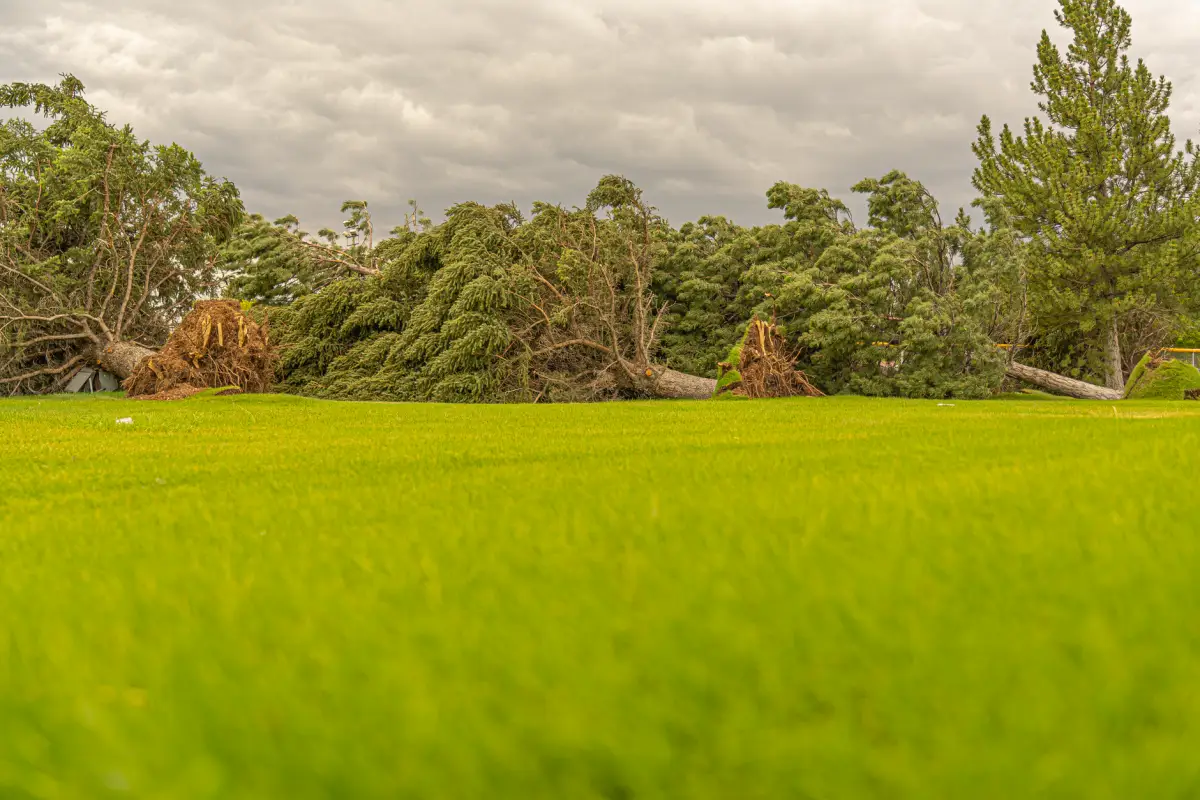
- The wind has passed, nothing is hanging, and you have a yard full of broken branches. That's storm cleanup, and it should be quoted as scheduled work at scheduled prices, not as an emergency.
- A tree or limb is on the primary power lines along the street. Call the utility. That's their work, they do it at no cost to you, and a tree crew should not be first on that scene.
- The tree fell in an open part of the yard and hit nothing. It's not urgent, and your insurer probably won't cover the removal either — that usually requires damage to a covered structure.
- It's a few small branches down and you own a handsaw. The Olmsted County Compost Site on Energy Parkway NE takes resident yard waste free, seven days a week during daylight hours.
- Someone knocked on your door offering to deal with it right now for cash up front. That's the oldest post-storm routine there is. Get a written quote from someone you called.
Frequently Asked Questions
- What counts as a tree emergency?
- A hazard that is live right now: a tree or limb on a structure or vehicle, a broken limb hung up in the canopy over somewhere people walk, a trunk that has shifted or cracked, a fallen tree still under tension, or blocked access to the property. If the wind has passed, nothing is hanging, and the problem is a yard full of debris, that is cleanup — it is real work, but it should be scheduled and priced as scheduled work.
- Do you offer after-hours emergency tree service in Rochester?
- Yes — after-hours and weekend calls are taken. What cannot honestly be promised is a fixed arrival window, because response depends on what is already in progress and on how many calls a single wind event has generated at once. If a specific timeframe matters to your situation, ask when you call rather than assuming one.
- A tree fell on my house. What should I do first?
- Get everyone out of the affected part of the building and stay clear of any downed lines, treating every line as live. Then photograph the tree, the damage and the point of impact from several angles before anything is moved, because that documentation is what your claim rests on. Call your insurer and a tree service. Do not start cutting — a trunk resting on a roof is holding load, and cutting in the wrong order shifts that load into the structure.
- Will insurance cover emergency tree removal?
- Usually when the tree has damaged a covered structure — house, garage, fence, or in some policies a vehicle. Usually not when the tree simply fell in the yard and hit nothing, which is generally treated as the owner's maintenance. Policies differ enough that this is worth reading rather than assuming. Keeping the emergency make-safe invoiced separately from the scheduled removal tends to make the claim easier to process.
- Can I cut up the fallen tree myself?
- A trunk lying loose on open ground is one thing. A trunk still hinged to its stump, resting on a fence, or wedged against another tree is another entirely — it is holding stored tension, and the first cut decides which way it moves, often fast. That situation injures more homeowners with chainsaws than any other. Bent-over saplings under load are the same problem in miniature. If anything is bearing weight or bent, leave it.
- Why does emergency work cost more?
- It is unscheduled, frequently after hours, and the tree is already failing, which makes it more dangerous and slower to work than a planned removal. The practical way to control the cost is to separate the make-safe from the finish: pay for neutralising the hazard now, then have the removal, wood and cleanup quoted as ordinary scheduled work in daylight.
Learn More
- City of Rochester — High Risk Trees & Standing Dead Trees — how the city handles hazardous trees, the 20-day notice, and who to call about a boulevard tree
- Minnesota DNR — Oak Wilt Management — the exception for hazard cuts on oaks during the April-through-July high-risk window
- Olmsted County — Compost Site & Yard Waste Drop-Off — free resident yard waste drop-off at 305 Energy Parkway NE, seven days a week during daylight hours
Need Emergency Tree Service in Rochester, MN?
Describe what’s going on and get an on-site estimate — no charge for the visit, and no obligation to book the work.
Get My Free Estimate